
The Role of Environmental Professional Indemnity Insurance in Nature Restoration Projects
As nature restoration attracts greater private investment, Professional Indemnity (PI), and crucially our proprietary expanded version of it Environmental Professional Indemnity (EPI) insurance is a vital tool for managing professional risk, building investor confidence, and supporting the long-term success of natural capital projects and the market as a whole.
Environmental Professional Indemnity (EPI) Insurance Mini-Series | Part Two of Three
Nature recovery has entered a new phase
Across the country, landscape-scale restoration is moving from the margins to the mainstream. Projects that once depended almost entirely on public grants and philanthropic goodwill are now attracting serious private capital. Biodiversity Net Gain, voluntary carbon markets and other natural capital mechanisms (such as voluntary nature credits) are turning ecological ambition into investable propositions.
This evolution is welcome and necessary. The scale of degradation demands it. But growth brings scrutiny. As deal sizes increase and more parties become involved - ecologists, modellers, project developers, investors, regulators - the web of professional relationships and dependencies grows more complex, nature developers are starting to resemble the construction contractors they often work in opposition to. Expectations around governance, accountability and risk management are rising in parallel. Nature restoration is becoming an asset class, and asset classes require more than good intentions.
A standout example is Broughton Sanctuary in North Yorkshire, where a major landscape restoration programme recently secured investment from Rebalance Earth. There, GaiaSicura placed the UK’s first bespoke Environmental Professional Indemnity (EPI) policy. Read the full case study →




The demand for professional confidence
With this shift we are seeing a growing expectation: that these projects are not only ecologically credible, but professionally robust, well-governed and resilient to the kinds of challenges that arise when living systems meet financial commitments - and the professional work underpinning these.
Investors, landowners and project partners are no longer satisfied with beautiful vision statements and species counts alone. As nature restoration moves closer to something like an investable asset class, stakeholders want evidence that risks have been understood, that specialist advice is properly supported, and that the organisations delivering these projects are operating with appropriate structures in place.
Environmental Professional Indemnity insurance is an important part of that foundation. In the construction space a contractor cannot operate without a PI policy, now, in the nature sector it is fast becoming the same.
From ecological credibility to investment readiness
Every credible nature restoration project begins with sound ecological science. Habitat creation plans, biodiversity baselining, carbon modelling, monitoring frameworks, and environmental reporting provide the evidence that outcomes can be delivered. These foundations matter enormously.
Yet attracting and retaining investment requires something more. Investors need confidence that the professionals whose judgements shape project design, credit forecasts, long-term performance, and ultimately revenue generation are operating within a framework that recognises and manages professional risk. They look for the same principles of accountability, protection, and permanence that underpin investment in infrastructure, energy, or property. As natural capital markets mature, ecological credibility alone is no longer enough; it must be matched by professional credibility and the structures that support it.
Confidence: the benefit of EPI insurance
The greatest benefit of Environmental Professional Indemnity insurance is confidence.
that specialist advice is backed by appropriate protection.
that professional risks have been identified and transferred where possible.
that organisations involved in project delivery are operating within a robust governance framework.
For project teams, ie. the ecologists, surveyors, carbon specialists and managers walking the land and making judgements, it means they can focus on the difficult, rewarding work of restoration without carrying disproportionate personal or organisational exposure.
For investors and landowners, it provides a clear signal that the project is being managed to the standards expected in other mature asset classes. Increasingly, the presence of properly structured EPI is becoming part of what makes a nature project legible and trustworthy to institutional participants.
Why nature projects create unique professional risks
Nature restoration is not conventional professional services work. It sits at the intersection of expert judgement and direct interaction with sensitive, dynamic living systems. Ecological surveys inform designs that will shape landscapes for decades. Biodiversity metrics influence investment decisions and credit issuance. Nature-based and carbon forecasts underpin commercial models. Monitoring and verification provide ongoing assurance.
When professional expertise directly influences both financial outcomes and environmental results, liability follows. An error in assessment, a flaw in modelling, a gap in methodology or a misjudgement in project design can lead to financial loss for third parties: whether investors, landowners or other project partners. In a sector where reputation travels quickly and relationships are often long-term, the consequences extend beyond balance sheets to trust and future opportunities.
These risks are real because the work itself is real: people making judgements that affect soil, water, species and the success of entire restoration programmes.
Why standard professional indemnity isn't enough
Traditional Professional Indemnity insurance was designed for a different operating environment: one where advice stayed largely on paper or in meeting rooms and rarely translated into direct interventions in protected or recovering habitats. Nature restoration projects blur those boundaries. The professional service often informs or accompanies physical work on the ground, across broad contractual webs, and through multiple stakeholders, creating exposures that extend into environmental liabilities, biodiversity impacts, and long-term ecosystem outcomes.
Standard policies were never built to contemplate the specific ways in which professional activity in this sector can intersect with habitat performance, regulatory requirements, or third-party claims arising from environmental effects. Using generic cover here is like navigating a complex, tidal landscape with a map designed for dry land: some of the most important contours are simply not shown.
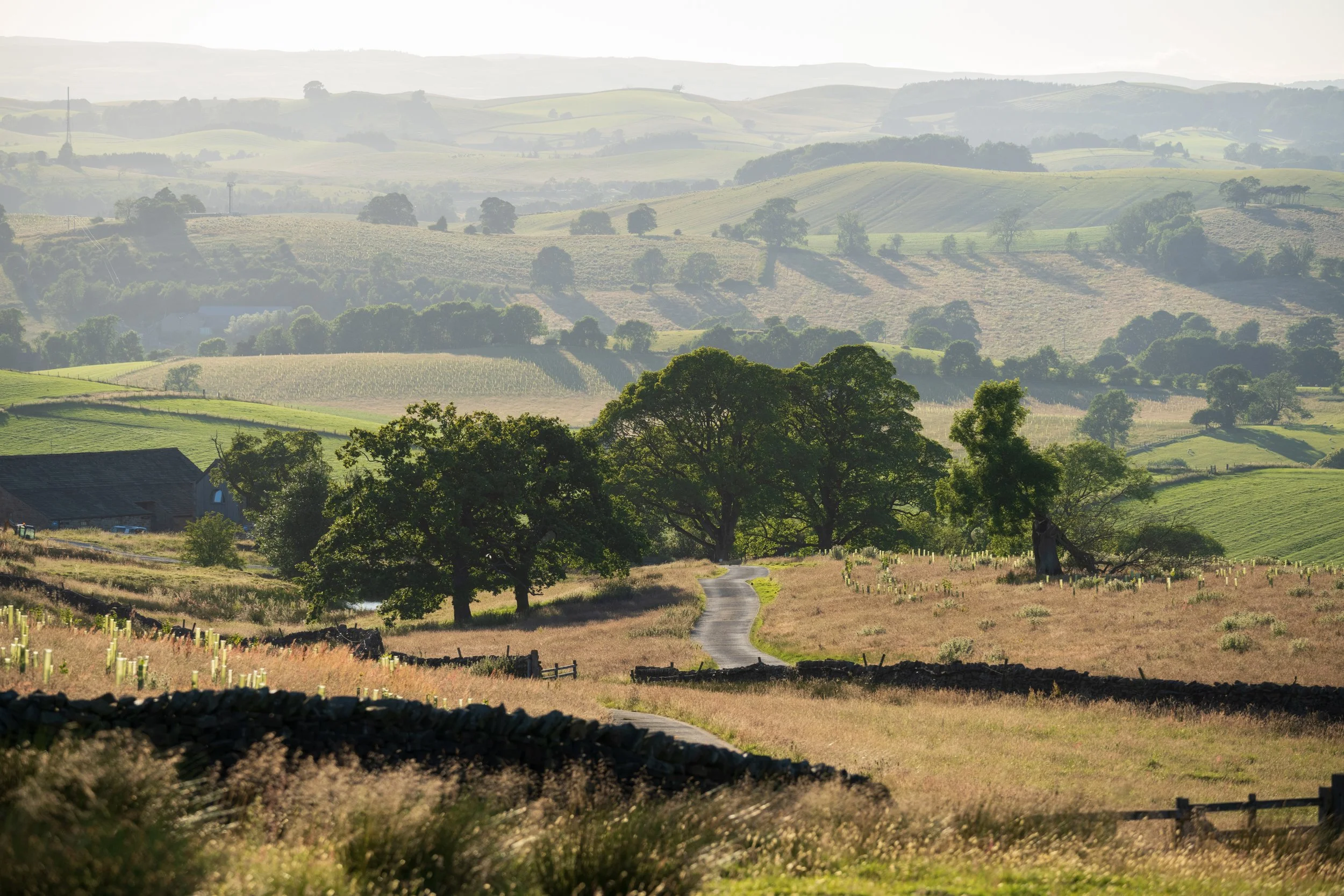
Broughton Sanctuary, Credit Simon Jauncey
Environmental Professional Indemnity: designed for nature
GaiaSicura's bespoke EPI policy has been developed specifically for organisations involved in the development and delivery of natural capital and nature restoration projects.
Alongside protection for professional errors and omissions, the policy extends to environmental damage arising from professional activities where legal liability exists, including biodiversity and habitat-related exposures. It also adds in cover for legal defence costs, emergency mitigation costs, sub-contractor risks, and broad civil liabilities associated with professional services.
The closest comparative is ‘Contractors Professional Indemnity’, a space where our CEO William Butler dominated the insurance landscape for several years in London, those expertise have now been brought to the nature regeneration space and so our bespoke EPI policy addresses the risks far more accurately than standard commercial PI ever could.
By combining professional indemnity, contractors operations, and environmental protection, EPI provides a more appropriate form of risk transfer for organisations operating within this emerging market, with no material pricing difference due to the market position we operate within.
Why this matters for the future of nature finance
Natural capital markets are evolving rapidly. As larger pools of private and institutional capital enter the sector, expectations around governance, professional standards, and risk management will continue to rise. Investors (and buyers) deploying significant capital into other forms of infrastructure and assets will apply comparable rigour here.
Environmental Professional Indemnity insurance is not simply about protecting against claims. It supports contract requirements, helps safeguard professional reputation, and provides confidence that market specialists are backed by equally specialist risk transfer. In short, it helps to create conditions that allow investors, landowners and project partners to participate in nature restoration with greater certainty.
Conclusion: confidence enables investment
The future of nature restoration depends on more than ecological ambition. It depends on creating projects and delivery entities that inspire confidence: in their science, in their delivery, and in the professional frameworks that surround them.
EPI insurance supports that equation. It protects the people doing the specialist work, gives investors, and stakeholders reassurance, and helps ensure that professional risks are managed rather than left to internal due diligence. As the sector matures, this kind of structured risk management is becoming part of the basic operating environment.
Confidence makes investment possible. Investment makes larger-scale restoration possible, and, when it’s done properly and with the right foundations, it creates collective and real value: for nature, for communities, and for the long term.
Speak with the team
If your organisation is involved in the development or delivery of a natural capital or nature restoration project, our team of experts can help you understand how Environmental Professional Indemnity insurance fits within your wider risk management strategy.