
From Protection to Enablement: Reflections from London Climate Action Week 2026
Five perspectives from the GaiaSicura team on London Climate Action Week 2026 (LCAW): exploring how insurance is evolving beyond risk transfer to create confidence, unlock private capital and scale investment in nature.
Five Perspectives from London Climate Action Week 2026
In what was a startling example of the acute impacts of Climate Change versus the Chronic impacts, LCAW took place on the hottest week in June since records began. All underpinned by the uneasy thrum of air conditioning units unfit for purpose and baking Victorian stone walls creaking in heat that they had no mechanisms for releasing.
I had taken the decision that rather than host an event in our first year we would attend as many as we could, talking at a few, listening in others, and generally getting a feel for how conversations ebb and flow throughout the course of the week. Amongst warnings of echo chambers and cynicism around how it’s all a lot of ‘hot air’ – pun intended – specific themes and observations emerged across the five days of chaotic breakfasts, coffees, lunches, and conferences that gave both positive and negative feedback for us to takeaway and focus our thinking for the coming year.
I tasked the team with bringing out their own themes from the week and they didn’t disappoint. By spreading our resource across events, the considerable brainpower of GaiaSicura was able to draw together a web of insights that will help to focus our intent for the next six months, to understand how the small “insurancy” corner of this world we’re looking to improve can integrate, and to see where our energies are best focused at other action weeks leading into next year.
Below are the team’s individual insights with my own identified themes woven between them:
Sagal Ali, Broker and Client Executive: why nature deserves infrastructure thinking
The most compelling takeaway of LCAW for me was the framing of nature as infrastructure. Too often nature is spoken about in extractive terms, an unlimited resource to be drained. But viewing it as natural infrastructure, a critical asset that delivers essential services and underpins our entire economy, entirely changes how we think about it.
The Nature as Infrastructure event, hosted by Earth Capital Nexus in partnership with LSE, UKCEH, and the UKRI Integrating Finance and Biodiversity Programme, was an incredibly interesting session that gave me a lot of food for thought.
The central idea put forward at the event was that nature provides foundational ecosystem services just as critical to prosperity and resilience as roads, rail, or power grids do. For example, soils are the productive base of the entire food economy, and losing soil health means you lose food security. Urban green space acts as cooling and air-quality infrastructure, and forested upland catchments filter, store and regulate the flow of water. They're essentially doing jobs we'd otherwise have to pay to engineers. From a public economics lens, nature is already acting as (or complementing) built infrastructure that society would otherwise have to build and operate at a real cost.
Naturally, throughout this conversation I reflected on what it meant for insurance, and for the innovative solutions that we are currently a part of. Built infrastructure is routinely insured, financed, and maintained through clear cost-benefit and risk-transfer mechanisms. Natural infrastructure delivers equivalent and sometimes even greater value, but almost none of that same financial structure exists for it.
In nature insurance we already approach a nature project much like a construction project, assessing the asset, the risks to delivery, the parties responsible, and what happens if it fails. That mindset is exactly what 'nature as infrastructure' demands, and treating our natural systems as infrastructure, something to finance, insure and maintain, is the logical next step.
Will’s first theme: nature is infrastructure
True to form, Sagal cuts straight to the heart of it. Fundamentally the ecosystem services we are discussing are Public Goods, except public money is utterly insufficient or uninterested in paying for it at the scale that’s needed.
So how do we address this?
The same way we approach every other public good, by treating it as infrastructure:
identifying mechanisms to systematically value the output of the infrastructure project;
insuring that functionality;
funneling private/public blended finance and bond structures into the ecosystem service;
and judging the return based on efficacy and pre-defined performance metrics agreed through national frameworks, standards and certifications.
Carbon sequestration is a public good. There is no actual direct benefit to a company by paying for it except to ‘do the right thing’ (to take an EXTREMELY reductive view), and yet because there is an (inter)nationally agreed framework, structure, quality definition, and insurance availability there is a scaling market.
Biodiversity Net Gain (BNG) is the same. If you impact nature, you are impacting infrastructure. You need to replace and improve it (there’s an argument here around mandatory carbon credits that I will leave you all to infer;climate is infrastructure too). Similar mechanisms can operate across all ecosystem services, given adequate frameworks, positioning and greater collaboration across public and private sectors – starting with water first, please.
Hannah Floor, Founder’s Assistant: insurance as an enabler of nature
Outside of industry specific events, discussions about insurance are often framed negatively, focussing on the sector investing in degenerative activities, areas becoming uninsurable, the insurance protection gap, rising premiums, and so on. It is less often discussed, however, as an enabling factor: how can insurance help us do some good? Fortunately, last week, we were present in spaces where the conversation began to shift. There was more talk of a paradigm shift in which insurers are seen not only as risk carriers, but also as enablers of the transition.
Ideas are a powerful lever for change because they shape practice. UNEP’s Transition Insurance Series highlighted that such ideas on nature and insurance need to evolve. Preventing nature-related risks is necessary, and it is our responsibility to act. It also makes good business sense. This shift should happen through dialogue within companies and organisations, where people are made aware of the dynamics and interdependencies with nature by highlighting relevant use cases.
Nature-based solutions also create measurable value. Treating resilience as an asset and framing it as an intangible asset helps board-level to see nature restoration projects as value-creating, not just cost centres.
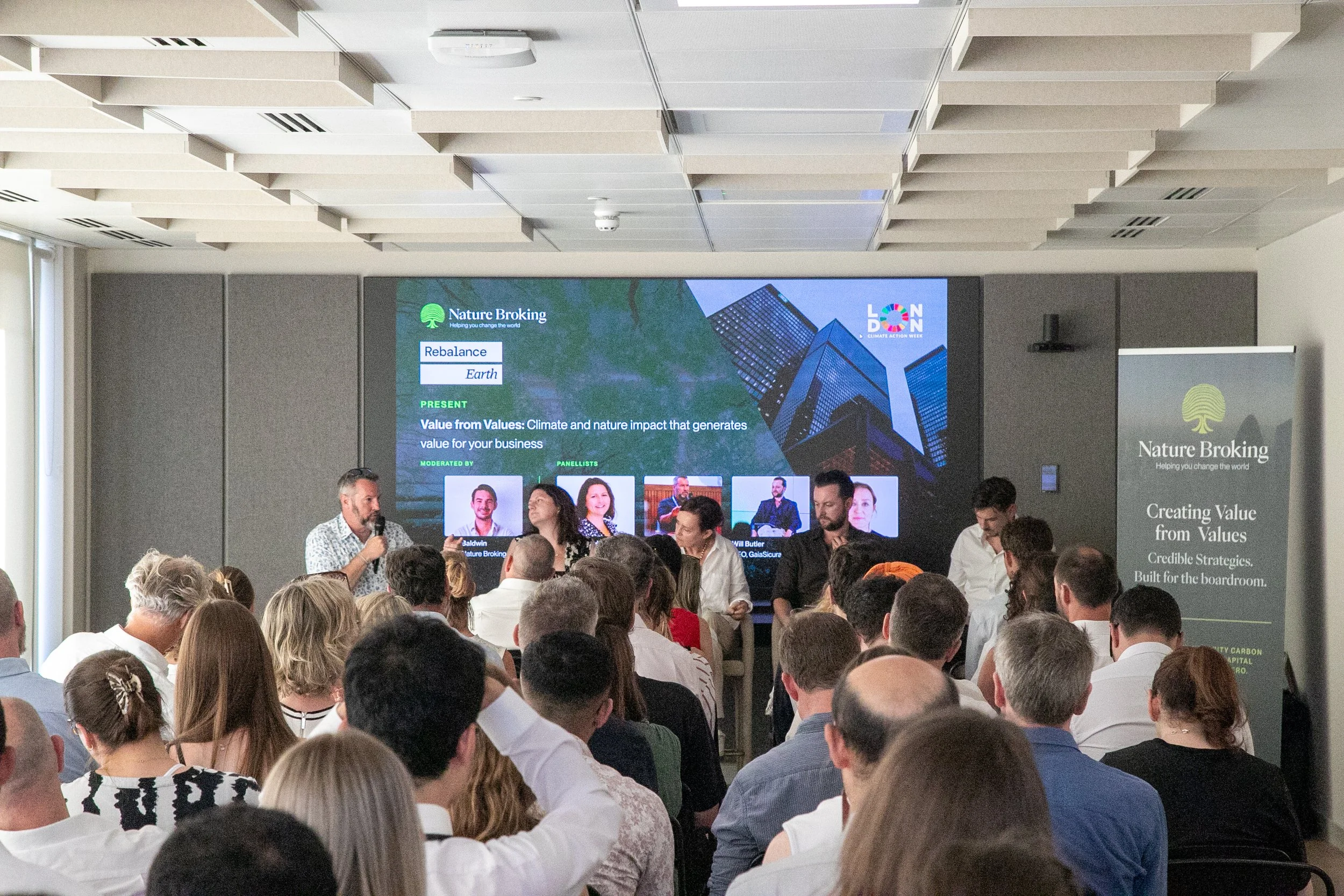
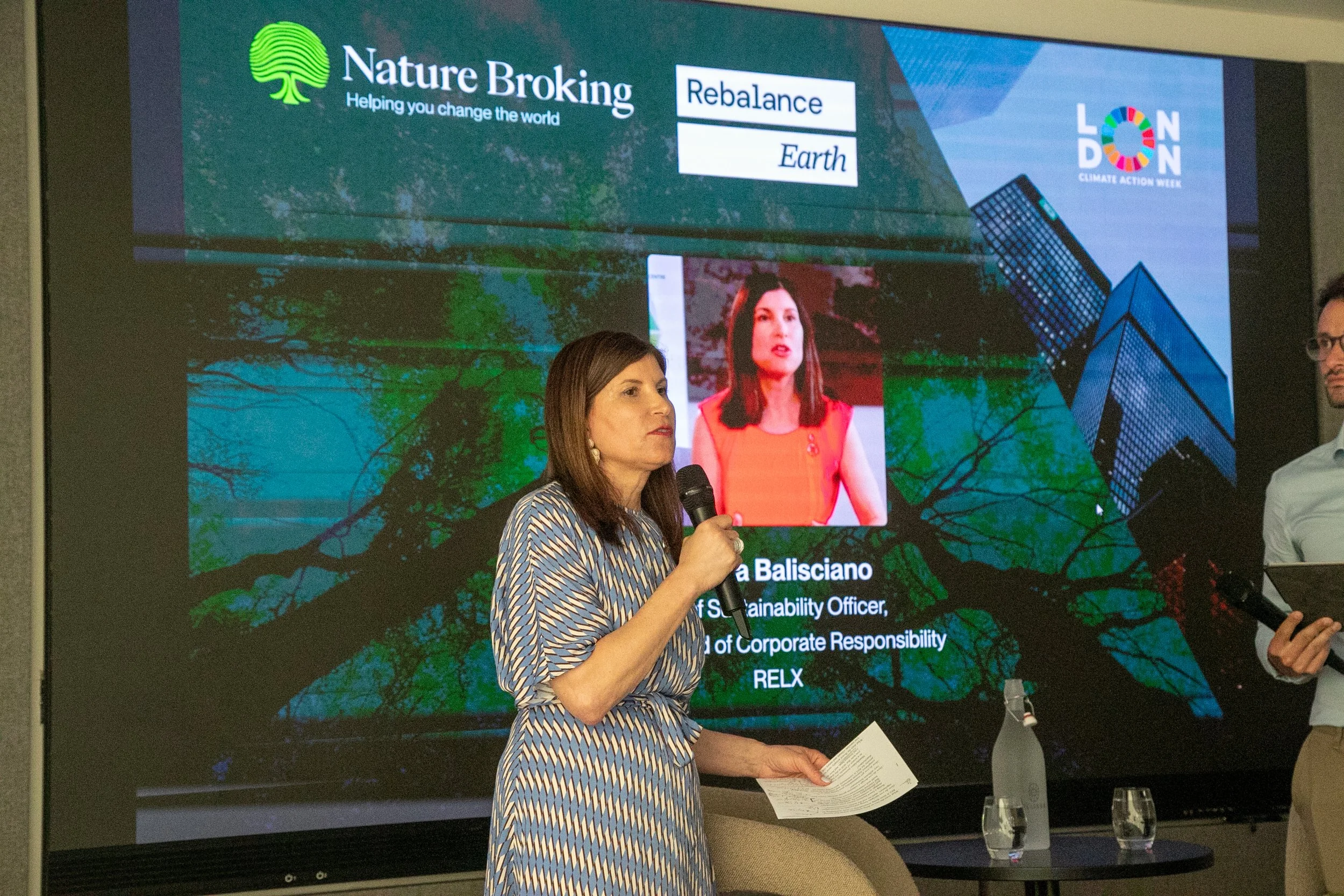
At Value from Values: Climate and Nature Impact that Generates Value for Your Business, co-hosted by Nature Broking and Rebalance Earth, the panel explored a fundamental question: how do we convince boards to invest in nature? Our CEO William Butler made one point that resonated with me: boards are not amorphous institutions. They are made up of people with both corporate and personal motivation. While share price will always matter, debates about nature have become far more compelling when framed as a value-at-risk issue. On the whole, we are increasingly demonstrating the value of nature, its connection to a company's mission, and the confidence boards can have in investing in nature-based solutions.
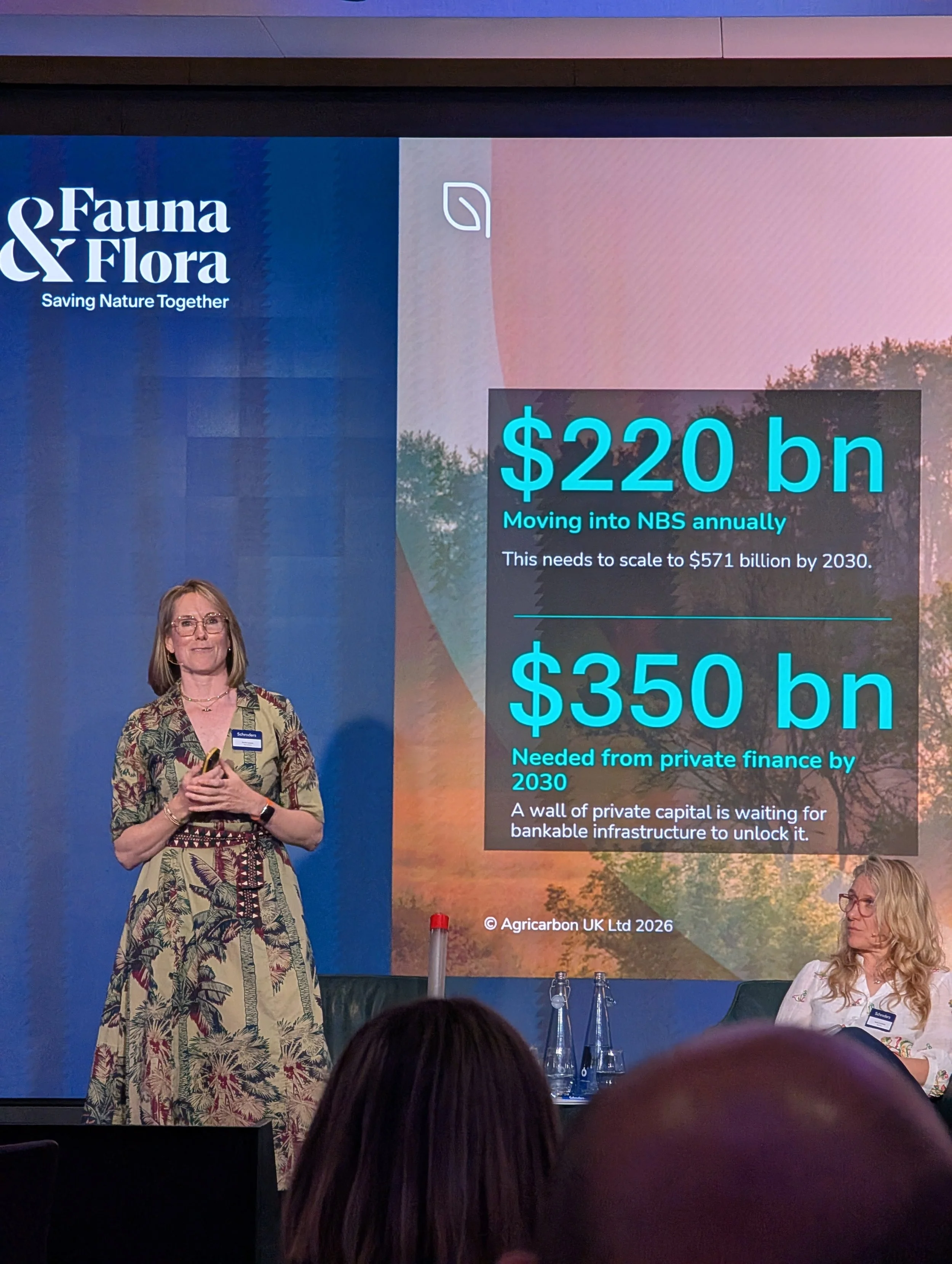
That theme continued at Insurance and the Nature Dividend, hosted by UNEP FI and the UNDP Insurance and Risk Finance Facility. This session highlighted how insurance can both protect natural assets and the investments flowing into nature projects, while also supporting nature through underwriting, risk advisory and asset management. For me, the strongest message was that insurers can become builders of confidence, converting uncertain outcomes into defined risks, improving project bankability, and helping unlock the private capital needed to scale nature-based solutions.
I went into the week with the main goal of exploring two questions: how do we scale nature regeneration projects quickly as a counterforce to our degenerative economies, and how do we move nature to the centre of decision-making? For both questions, I felt reassured that I am working in the right sector. I realised that insurance can not only help nature regeneration projects scale more quickly by increasing investor confidence and bankability butcan also help move nature more centrally into business decision-making, as it makes sense across the whole balance sheet to take care of nature.
Will’s second theme: confidence is lacking
Hannah bravely joined us from her European strongholds of Amsterdam and Zurich, plunged into a stiflingly unfamiliar world of insurance brokers and a London that wasn’t wet. Whilst somehow managing to ensure I was always in the right place at the right time AND providing an intellectual insight to her experience that I can only just about wrap my head around; she touches some key points here.
It is clear now that ‘sustainability’ as a term is suffering. Political ill will being the strongest headwind but also fatigue of the implications that have been (unjustly for the most part) assigned to the term from the very world that is so desperately needed in the nature space – finance.
Sustainability has come to carry undertones of reporting, disclosures, tokenistic ‘blue-sky thinking’, greenwashing and more. These associations have all been unfairly attached to the term, and as a result, it is increasingly being left behind. Even the word sustain feels - impotent at this stage, not strong enough. Simply sustaining is not going to cut it in the wake of the challenge ahead of us.
We need wholesale change, not simply to sustain, and that is the role our industry must play.
Nature on the other hand, is tangible. Its benefits are easily demonstrated and visible (if not always translatable). There is an enduring public goodwill with it, and it lends itself naturally into the parlance of resilience. “Nature protects” is a sentiment that few would argue against; it is the preventative medicine for the fever that gripped the city.
As Hannah cites, this is something that the insurance market is beginning to grasp. It starts with what they do best - insuring things - but increasingly extends to identifying new ways to enable nature and build resilience through it. Our industry is an old and slow-moving one, but it is immensely powerful - underpinning the entire global system - even a 1% incremental improvement in it will send ripples through the financial systems that can have significant impact.
Kai Salvador Cooper, Senior Broker: carbon markets need confidence, not perfection
One of the strongest themes I noticed throughout LCAW was that conversations have moved beyond whether carbon markets will scale, to how they become investable. The focus is no longer simply on environmental ambition, but on building the commercial infrastructure that allows carbon to become a trusted asset class.
A standout session for me was, Carbon as Capital: From Financial Asset to Contracted Reality, hosted by UG Group at Brown Rudnick. The discussion, featuring Layla Khanfar (Bloomberg), Sonia Battikh (Citi) and Andrew Watson (Rethinking Capital), explored how carbon becomes financeable through accounting treatment, contracts, offtake agreements, financing and the market infrastructure that makes it auditable and bankable. In short, it looked at how carbon becomes an asset class that organisations can account for, contract and trade.
What stood out was the willingness to challenge assumptions. Unlike many discussions in this space, there were genuine differences of opinion around how carbon markets should be shaped and how they should grow. It reinforced that, while the market is maturing, there is still work to do before it is universally recognised as a defined and trusted asset class.
For me, the biggest takeaway was that confidence is the foundation of market growth. Standards, contracts and governance all have an important role to play, but specialist insurance is another critical lever. By providing certainty around project performance and delivery risk, insurance can convert uncertainty into defined risk, strengthen investor confidence, improve project bankability to help unlock the private capital needed to scale both carbon markets and nature-based projects.
My final event of the week, the EBN Live Show – Nature and Business, hosted by Roger McKerlie and the EBN, reminded me why these conversations ultimately matter. It was great to see Ashurst taking its sustainability and environmental initiatives seriously through its nature sponsorship strategy. This is exactly the kind of action we at GaiaSicura would love to from businesses across the Square Mile.
Regenerative farmer Doug Wanstall shared the practical work being undertaken to restore biodiversity and improve ecosystem resilience on his farm in Kent. His presentation brought the dialogue back to what these markets are ultimately trying to achieve: real, measurable outcomes for nature.
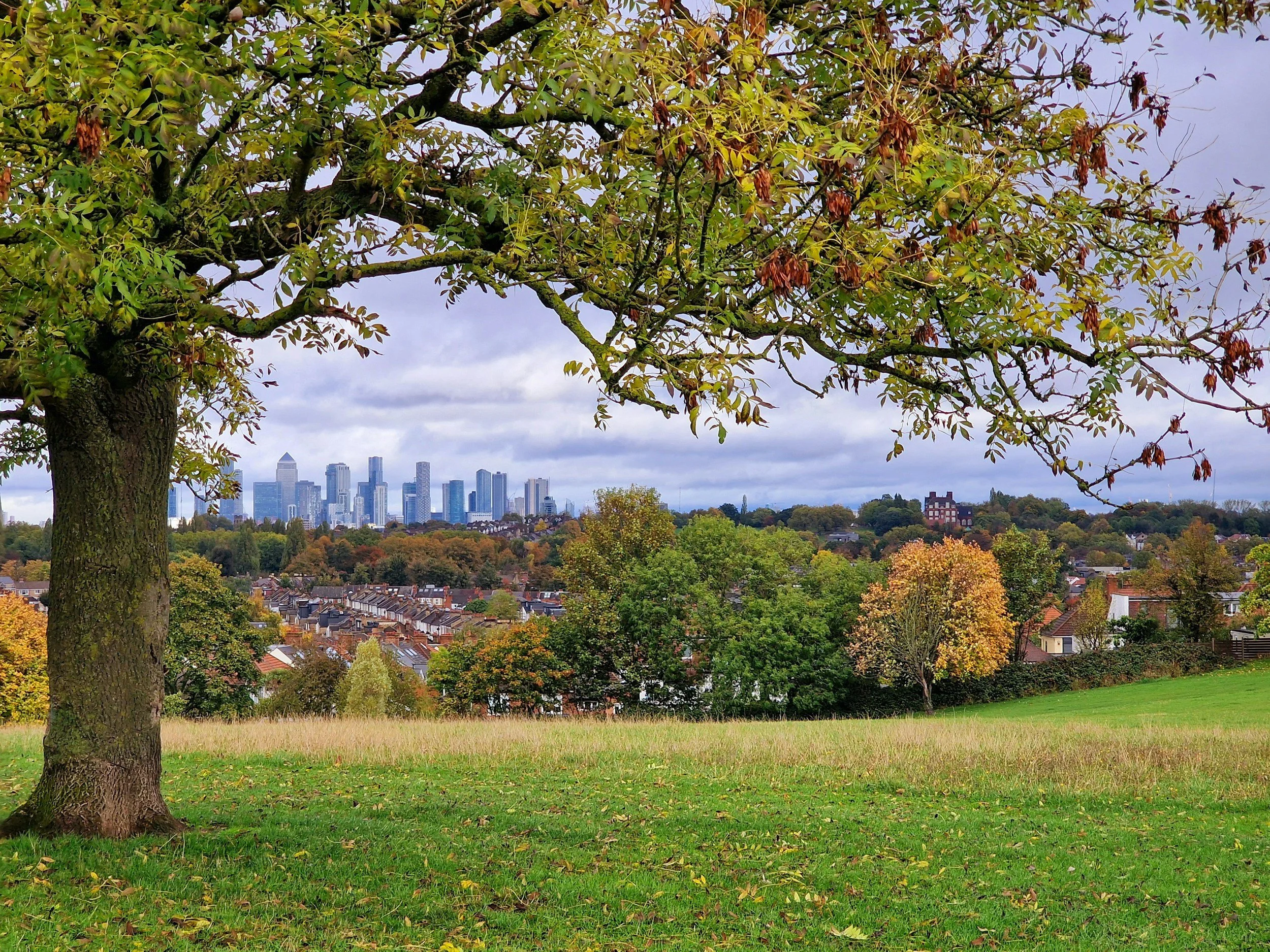
A final insight came from Katie Bowyer at the London Wildlife Trust, who highlighted that around 47% of Greater London is green space, making it one of the greenest cities in the world. It's a statistic that many people are unaware of, but one that perfectly illustrates how connected nature is to our everyday lives. For me, it was a reminder that while financial innovation is essential to scaling nature markets, the end goal is always the same: healthier ecosystems that create lasting value for communities, businesses and the environment.
Will’s third theme: there’s still too much fragmentation and infighting
Kai’s insights lead to a core and depressing theme that I was warned of but hoped not to see. Sadly though, it was still painfully obvious throughout the week that the attitude of “only I have the right idea and everyone else is wrong” remains deeply entrenched in our way of addressing these problems. It was written on so many faces as others were talking or outright said on panels and speeches. Perfect is still the enemy of good, and we continue to let incredibly high expectations be the reason to scrap something that works in favour of building a totally new solution, regardless of how long that might take.
The carbon market is the constant whipping boy in this world, with past transgressions being touted as a reason why the entire thing should be ditched in favour of whatever is the topic-du-jour. The fact is that the carbon markets have existed since 1997, and have grown, shifted, expanded and gone through multiple iterations since then, and they will continue to do so.
This ‘either/or’ attitude is infuriating. There is more than enough brainpower and resource in this space to improve carbon markets and develop new opportunities alongside them. Everything is iterative, no matter how good your/your government’s idea will be, it will not come out fully baked and will need to go through the same journey the carbon market has: let the thing that currently kind of works carry on working and improving and come up with something that is complimentary, or stackable, or at least derives benefit from it.
As Kai reiterates, carbon is investable. There is confidence in this market, it is insurable, rated, the due diligence is more intensive than some construction projects, debate on how they scale and where they should go is inspiring, debate around their necessary existence is boring and exhausting and we need to focus our energy elsewhere because the need is too urgent.
James Tunde, Broker: collaboration will drive the transition
Attending a range of climate and sustainability events over the past week was a great reminder of how quickly climate and nature are moving to the centre of business conversations. One theme came up time and again: tackling climate change isn't something that can be achieved by one organisation alone. It will take collaboration between businesses, investors, governments, and local communities to create meaningful, lasting change.
One session that really stood out was Local Origin's discussion on estate composting. It explored how local composting initiatives can reduce waste, cut emissions, and create circular systems within urban spaces. It was a simple but powerful reminder that some of the most effective climate solutions start at a local level. Not every project needs to be large or complex to make a real difference.
A statistic that stayed with me throughout the week was that around half of the world's GDP is dependent on nature and is affected by climate change and biodiversity loss. It's a powerful reminder that protecting nature isn't just an environmental issue; it's an economic one too. As natural capital continues to become part of investment strategies, building resilience into these projects will only become more important.
From an insurance perspective, this presents a real opportunity. Insurance has an important role to play in helping natural capital, carbon, and biodiversity projects move forward by giving investors, landowners, and developers greater confidence. By reducing risk and protecting both physical assets and financial outcomes, insurance can help unlock investment and support the growth of projects that deliver long-term benefits for nature, communitiesand the wider economy.
Personally, I came away feeling optimistic. It was inspiring to hear from people working across so many different sectors who all share the same ambition of creating practical, scalable solutions. The conversations throughout the week reinforced that climate, nature and finance are becoming increasingly connected, and it's exciting to be working in a space where insurance can help make that transition possible.
Will’s fourth (and final) theme: collaboration and optimism
What a way to summarise things from James, and a great way to finalise my thoughts of the week. Personally, and overall, I came away optimistic (despite the weather).
One thing that was palpable was that there was a real feeling of optimism from the groups we met and the conversations had. It felt good to not only to be part of the conversations but moreover to be bringing an apparently sorely lacking viewpoint from our industry - that of the optimistic independent.
Too often the perspective identified in Hannah’s insights around our industry is justified; we are hesitant, excuse-ridden, and above all pessimistic. This is by design, if insurance were not risk averse, it never would have worked but somewhere we lost the enabling factor that was supposed to underpin the system itself. Spread risk is inherent; losses are inevitable – but that doesn’t mean they have to accept it. Resilience is a form of portfolio management, and insurance/investment of projects and entities that provide this isn’t just good marketing; it’s good business.
So, as the week after the week before wraps up, and we peer over the horizon at another heatwave with little end in sight, I am hesitantly optimistic. It feels as though the conversation is not ‘why’ we should address climate change and nature degradation, but rather ‘how’ we address it, with powerful industries ready to deploy - if only we can figure out how to get them to. That part is on the collective ‘us’ now, those inside the bubble. They won’t do it themselves either without an incentive or a stick. It’s on the bright minds of the climate and nature world to figure out what those incentives are - not to begrudge our neighbours’ carrots or sticks but to enable one another to build this out in a net-positive for all manner.
Because if one thing was clear from the furnaces of the streets of London Climate Action Week: there is no time left for inaction, perfect is the enemy of good and if we haven’t answered some of these questions by this time next year then the actions we can take will be far fewer and have to be far more drastic.
Start Structuring Risk For Your Nature Project
Speak with GaiaSicura’s specialists in nature insurance, natural capital risk transfer, and ecosystem restoration protection, to explore how your project can be de-risked, financed, and delivered with confidence.