

Specialist Insurance for Nature & Natural Capital
GaiaSicura structures specialist insurance and risk transfer solutions for organisations investing in, developing, and delivering nature-positive projects.
Two Core Areas of Protection.
Specialist insurance solutions that protects nature restoration and the people responsible for delivering it, supporting environmental delivery, securing investment, and keeping projects on track.
01 PROTECT THE PROJECT
When events beyond your control cause loss or damage, ensuring your nature projects stays on track.
Nature Restoration Insurance
Loss or damage caused by insured weather events
Continuity of environmental outcomes
Contractual delivery commitments including optional transaction cover
Habitat restoration and reinstatement costs
Natural asset value and project finance as an option

02 PROTECT THE OPERATIONS
Environmental Professional Indemnity (EPI)
When commercial errors, civil liability, or environmental damage causes a claim, keeping the project on track.
Incorrect professional advice, assessment, or design
Accidental damage to the natural environment
Environmental damage liability and emergency response
Errors, omissions, and professional negligence
Legal costs from third party claims
Our Nature-Positive Insurance Products.
Explore our insurance solutions below, or speak to our team about the risks associated with your project.
Natural Asset Insurance
The baseline risk transfer for any project: insuring nature and the associated work to restore it.
-
You wouldn’t build a house without insuring the construction site against damage, and a bank won’t give your buyer a mortgage if you can’t get insurance on the house once it’s built.
Restoration insurance at its most basic covers loss events caused by named and natural perils such as:
Wildfire
Drought
Flood
Frost
Malicious Damage
And more.
Critically this insurance does not cover the ‘land value’ necessarily but rather the costs associated with restoration - it pays to get your restoration back on track.
Restoration insurance is the absolute basic cover that all projects should consider where they are geographically focussed.
-
We have created our own nature restoration specific Professional Indemnity policy that also includes damage caused to the environment by activities of the insured.
PI is a critical insurance for any business undertaking any professional activities such as advise, design, architecture, engineering etc. In fact, most buyers or financiers will require evidence of PI cover from projects and project developers as standard.
Natural Capital markets are by definition professional in as much as they are practical, therefore we have combined the two largest liabilities from a business’ own actions, mirroring how cover works in the construction industry. Existing policies vary in their suitability, with most being entirely insufficient for the new activities being undertaken.
Combining EPI and Site Restoration insurers against most risks to a standard project, with external risks covered under the Site Restoration, and internal risks covered by EPI.
-
Most individual projects are being undertaken by landowners as an alternative to historic landuse. Historic Estate and Property insurances will be insufficient for the new liabilities and risks being taken on.
We can work with your existing broker or directly to update your policies and ensure that your cover expands appropriately for the new activities.
BNG / Biodiversity Market Insurance
Biodiversity markets, especially the UK’s flagship BNG regulated market, are becoming an increasingly important way of financing nature. With them (regulated and not) comes a new set of risks that require specialist management and transfer.
-
We have created our own nature restoration specific Professional Indemnity policy that also includes damage caused to the environment by activities of the insured.
PI is a critical insurance for any business undertaking any professional activities such as advise, design, architecture, engineering etc. In fact, most buyers or financiers will require evidence of PI cover from projects and project developers as standard.
Natural Capital markets are by definition professional in as much as they are practical, therefore we have combined the two largest liabilities from a business’ own actions, mirroring how cover works in the construction industry. Existing policies vary in their suitability, with most being entirely insufficient for the new activities being undertaken.
Combining EPI and Site Restoration insurers against most risks to a standard project, with external risks covered under the Site Restoration, and internal risks covered by EPI.
-
You wouldn’t build a house without insuring the construction site against damage, and a bank won’t give your buyer a mortgage if you can’t get insurance on the house once it’s built.
Restoration insurance at its most basic covers loss events caused by named and natural perils such as:
Wildfire
Drought
Flood
Frost
Malicious Damage
And more.
Critically this insurance does not cover the ‘land value’ necessarily but rather the costs associated with restoration - it pays to get your restoration back on track.
Restoration insurance is the absolute basic cover that all projects should consider where they are geographically focussed.
-
BNG units don’t have a mechanism whereby they need to be repaid if they are not achieved, though there are fines involved for negligence.
There are however increasingly stringent requirements being brought in by purchasers of units, particularly NSIPs, who have a heightened long term interest in how their money is utilised.
Where potential stringent repayment clauses are likely in BNG purchase contracts we can pre-price insurance cover for the repayment of units in the event of a loss.
We can also insure habitat banks against the loss of registered but unsold units that cannot be recovered - similar to insuring stock in a warehouse that might burn down.
-
Responsible bodies have been requiring BNG project developers to hold contingencies in lieu of potential future failures meaning they are unable to continue with the uplift.
We are able to replace these contingencies with insurance cover that operates on a simple per hectare basis covering the responsible body for their obligations to continue the restoration of the site in the event a conservation covenant signee cannot and a step-in is necessary.
Carbon Insurance
Carbon is the most developed natural capital market, and its mechanisms increasingly look to insurance to transfer the significant financial risks associated with their creation and trade.
-
Carbon offtakes can sometimes take years to come to fruition, with offtakers needing to hedge against future price increases by pre-purchasing credits prior their validation.
This comes with two main risks, risk of the project failing between purchase and validation, and getting to an issuance point and the project having under-delivered on expected credits.
Insurance can provide confidence to offtakers, either through the project fully insuring their own pre-sale credits to make them more attractive to buyers, or by the buyers themselves taking out the full insurance for their own risk of needing to avoid having to double pay for undelivered amounts.
-
Once a credit is verified and issued there is a risk that it can be reversed, whether by a physical loss or a commercial / political issue.
Cancellation is more and more being used as a market mechanism in lieu of buffers, allowing projects to set aside a much smaller number of credits to their buffer pools if they hold this insurance, allowing for greater liquidity and flexibility.
Offtakers may also wish to hold cancellation cover across their portfolios so as to ensure that their offtakes are ‘permanent’, and won’t need replacing at any stage should a supplier fail, as the insurance would do that for them.
-
Non-payment cover is in theory a relatively simple form of insurance, it covers the credit risk of an investor / financier who is providing up front funding to a project, insuring against the default on that repayment.
In practice it involves a rigorous underwriting process looking into the investment justification and the project’s risks from the ground up and top down, however it can be a significant enabler of finance across large scale investments into project restoration and investors and developers alike should be aware of its utility.
-
Carbon buffers are in essence insurance policies, covering the risk of reversals of credits outside of project control. They are however highly inefficient and restrictive when compared to standard insurance products, requiring high percentages of potential revenue to be removed from potential sale with highly restrictive repayment requirements that can lead to breakdowns of commercial relationships.
By insuring the buffers, or providing buffer replacement insurance we can unshackle these mechanisms and either remove the requirements, or allow for far greater flexibility of buffer utilisation and contribution and several major carbon standards are working with insurance to alter these mechanisms.
Investment / Finance Protection
Projects need up front funding, and just like in construction or property, that investment needs to be confident in the project or business managing that. Insurance is a crucial market infrastructure for investors to secure that confidence.
-
Non-payment cover is in theory a relatively simple form of insurance, it covers the credit risk of an investor / financier who is providing up front funding to a project, insuring against the default on that repayment.
In practice it involves a rigorous underwriting process looking into the investment justification and the project’s risks from the ground up and top down, however it can be a significant enabler of finance across large scale investments into project restoration and investors and developers alike should be aware of its utility.
-
Credit insurance is a critical part of any investment market, covering the default of either a loan or investment in a project or company.
Whilst this is a highly complex insurance we are able to facilitate different tiers of cover, either covering investments against loss due to natural peril, or for any delay or default (the latter being far more complex)
-
Investors rarely hold a single investment in a single asset class. It quickly becomes far more efficient to insure a portfolio of assets or sites than it does individual ones, taking a maximum potential loss over a year rather than individual site-by-site limits.
This aggregation of projects canoften be the most price efficient way of insuring the financial elements of nature given the economies of scale and the incorporation of multiple geographies reducing overall risk profile.

Third Party Insurance
Those operating as advisors and third party contractors, aggregators, developers, and other ancillary services to nature restoration face a new set of risks as commercial markets develop and climate risk increases. Insurance should accommodate these changes.
-
We have created our own nature restoration specific Professional Indemnity policy that also includes damage caused to the environment by activities of the insured.
PI is a critical insurance for any business undertaking any professional activities such as advise, design, architecture, engineering etc. In fact, most buyers or financiers will require evidence of PI cover from projects and project developers as standard.
Natural Capital markets are by definition professional in as much as they are practical, therefore we have combined the two largest liabilities from a business’ own actions, mirroring how cover works in the construction industry. Existing policies vary in their suitability, with most being entirely insufficient for the new activities being undertaken.
Combining EPI and Site Restoration insurers against most risks to a standard project, with external risks covered under the Site Restoration, and internal risks covered by EPI.
-
Businesses need insurance both by law and by requirement of their own risk management, and stard commercial insurances are as important as any other niche types. We have a roster of commercial insurers that are happy to provide specific cover for nature related businesses and their operations, without accidentally excluding the critical work being done, or overlapping with the other forms of cover.
-
Environmental Liability cover is usually used in construction contracting, however its applications are broader, covering the damage that companies might do accidentally in the process of their normal operations.
Pollution covers can also be wrapped into this form of insurance, particularly important for projects that are working with extractive offtakers or are in the agricultural space.
-
Responsible bodies have been requiring BNG project developers to hold contingencies in lieu of potential future failures meaning they are unable to continue with the uplift.
We are able to replace these contingencies with insurance cover that operates on a simple per hectare basis covering the responsible body for their obligations to continue the restoration of the site in the event a conservation covenant signee cannot and a step-in is necessary.

-
Traditional forestry insurance is one of the critical starting points for any afforestation project.
Covering replanting costs at implementation if any trees are lost, through to damage to established forests, taking the asset value of the trees based on their declared amount each year.
-
Taking the exact same parameters of Standing Timber but simply incorporating the value of the accumulated or pre-sold carbon credits each year this is a cost effective and powerful cover for projects looking to provide some degree of comfort to offtakers or investors.
-
Parametric insurance is often seen as a silver bullet in nature insurance, however it has very limited application in practice due to it’s pure single trigger, single location issues. For large regenerative agriculture schemes however this is turned on it head and we are able to provide comfort to stakeholders, farmers, and scheme managers alike.
-
Soil carbon is being seen as a strong way for farmers to change their traditional practices whilst continuing to keep land in production.
This balance of reducing and sequestering carbon whilst maintaining food security is key, however it is often seen as higher risk than other carbon types.
We have co-created the first soil carbon delivery policy - case study below - to wrap soil carbon credits with a guarantee of delivery and permanence for buyers to have absolute confidence in the continuing existence of their credits post purchase and post sequestration.
Regenerative Agriculture / Forestry
Land doesn’t need to be taken out of use to contribute to nature regeneration. Regenerative and sustainable practices are perceived as high risk to landowners and scheme managers, and insurance is an established mechanism to provide that stakeholder confidence.

Bespoke
Nature does not fit into frameworks, we are making frameworks to fit portions of it. By definition it is varied and uncontrollable in ways that defy prediction and categorisation. Some projects won’t fit the above, and so need their own bespoke view, some examples below show how we have approached certain elements of this, but ultimately some projects will simply need something bespoke.
-
A highly niche area, but when species are reintroduced to areas there is often the risk of clashes with local populations. Government compensation schemes can work, but often governments do not have the impetus to implement them.
We can work with highly specialised insurers or captive solutions to create insurance products that can compensate populations or local municipalities for losses caused by reintroduced species.
-
Where nature is not ‘owned’ it can be difficult to see how the damage done to it can be insured. However costs to restore will always be incurred by someone. We work with a group of specialist parametric and liability insurers to provide disaster response and emergency funding to enable restoration of damaged coral reefs post natural disaster.
-
The resilience of natural spaces often is defined by the work done to them in order to prepare them for impending potential losses.
This is often not a targeted or measured approach however and the growing risks of fire, drought, and other issues around increasing weather unpredictability mean losses to nature due to its lack of resilience are becoming larger and more common.We can create bespoke parametric policies surrounding high risk periods to allow for targeted payments to be made for those areas of nature that are at greatest risk and hopefully mitigate their potential future losses.
-
Heat stress is an increasingly high profile loss area. Urban forests are seen as a mechanism for cities to be more resilient to these risks.
We are working with specialist insurers to create replanting and value replacement cover for cities who have high numbers of trees at risk of being lost to physical perils, and therefore losing this resilience.
Regenerate Outcomes | Case Study | 2026The Challenge
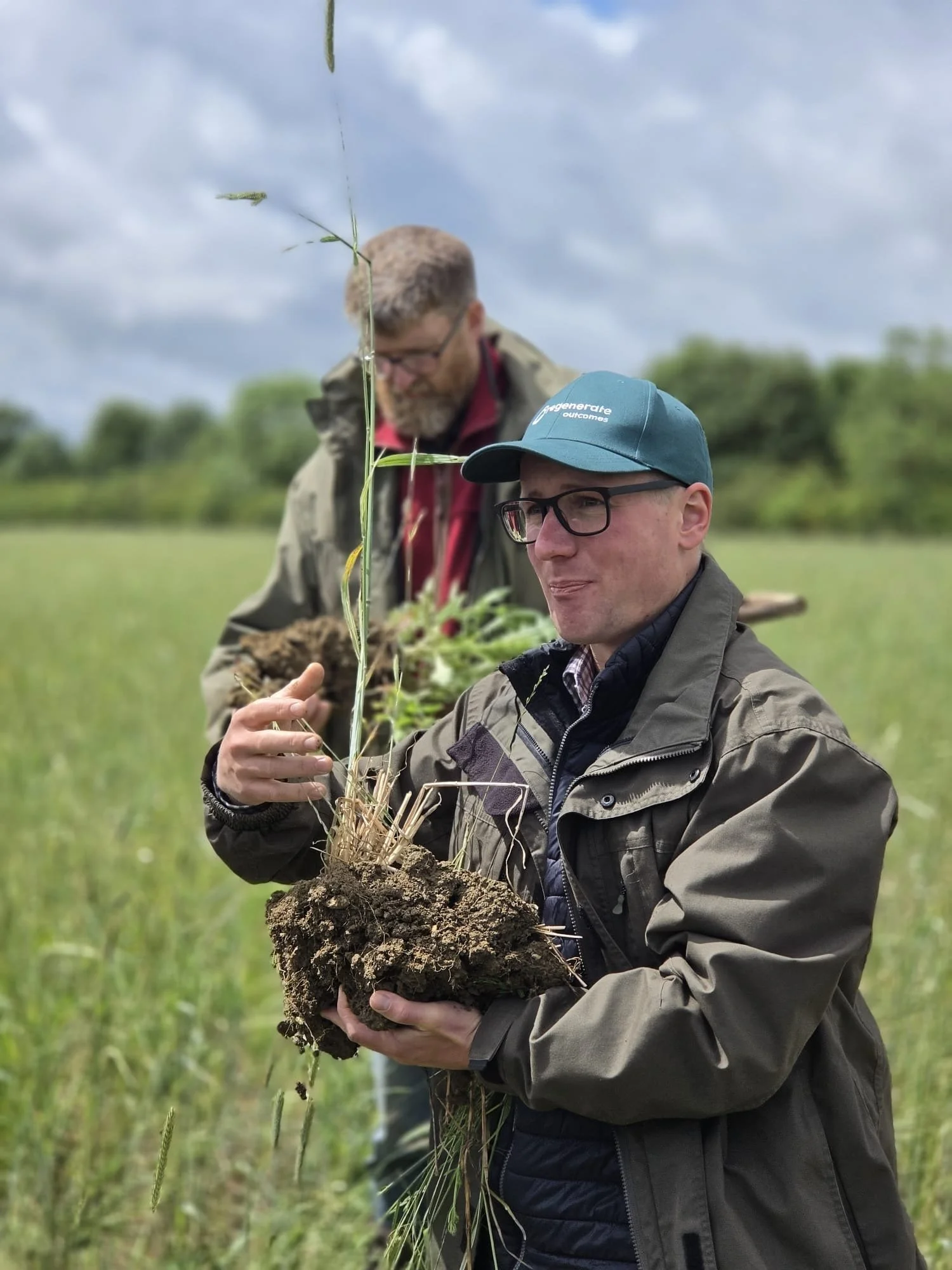
Regenerate Outcomes operates a soil health mentoring programme for British farmers and landowners combining modelling with laboratory measurements to track changes to farm emissions and soil carbon stocks. This data supports the generation of Verified Carbon Units (VCUs), meeting high certification requirements of the Verified Carbon Standard. Climate-conscious companies purchase these VCUs in order to offset unavoidable emissions and create lasting impact on nature and farming communities.
However, even when following a rigorous monitoring and verification process, forward sales carry delivery risk. Projects may under-deliver or fail to deliver contracted credits, creating financial uncertainty for both the supplier and the buyer.
The Solution
GaiaSicura arranged specialist Carbon Non-Delivery Insurance, underwritten by certain Underwriters at Lloyd’s through Kita Earth, a Lloyd’s Coverholder.
The policy provides cover for defined non-delivery risks arising from circumstances beyond Regenerate Outcomes’ reasonable control, subject to policy terms. It complements the project’s measurement and verification processes by providing an additional layer of financial protection around future VCU delivery.
“Within our project we are aiming at the highest level of data reporting and verification to match the reporting demands of companies’ decarbonisation plans. Whilst we have laid strong foundations for additionality and data rigour, there remains delivery risk. This insurance is critical to protect the buyers of these Verified Carbon Units and ensure that they will be made whole within their plans.”
The Benefits
Stronger buyer proposition: Adds a layer of financial security backed by a Lloyds of London insurance policy ensuring the future delivery of contracted carbon credits.
Greater confidence in forward sales: Manages any uncertainty regarding delivery risk when buyers commit before credits are issued.
Replacement credits: A valid claim can firstly be settled through replacement credits with pre-agreed attributes benefiting permanence, rather than cash alone.
A scalable structure: Supports additional carbon transactions without requiring an entirely new insurance framework for every sale.
Aligned incentives: Regenerate Outcomes retains a self-insured portion of the risk, maintaining its stake in successful delivery.
Structure Risk Before You Scale Your Project
Speak with one of our specialists in natural capital project insurance and biodiversity risk transfer to explore how your project can be de-risked, financed, and delivered with confidence.
Confidential, expert-led discussions. Response within 3 working days.