
From Soil to Credit: Little Hill Farm Visit
Learn about how a recent farm visit explored how regenerative agriculture, soil carbon credits and nature-based finance are helping UK farmers restore ecosystems while building resilient, climate-positive food systems.
Collaboration for a nature-positive future
On 4 June, Nature Broking and Regenerate Outcomes organised a visit to Cranley Barn Farms, run by Tom and Mary Edmondson, to explore how regenerative agriculture is delivering climate impact and consider how different industries can work together to support a transition to nature-positive systems that nourish rather than deplete the land.
The visit brought together stakeholders across the carbon, insurance, and agricultural sectors to discuss the opportunities, challenges and practical realities of scaling regenerative farming in the UK.
Regenerative agriculture
The day offered a chance to reflect on what this transition involves, and why it matters for planetary health.
“Regenerative Agriculture is farming in synchrony with nature to reveal, repair, revitalise and restore ecosystem functions, starting with life in the soil and expanding the life above. Relying more and more on the biology in the soil, instead of an array of pesticides and synthetics.” Kiss the Ground Film
Compared to conventional agriculture, regenerative practices aim to replenish degraded soils by drawing atmospheric carbon into the ground, improving water retention and working in harmony with complex natural ecosystems to restore biodiversity and wildlife.
Recent research suggests that regeneratively grown crops can be more nutrient-dense than those produced via conventional methods adopted since the 1940s to boost crop productivity. By reducing reliance on external inputs, regenerative practices can also improve farm profitability and resilience over the long term.
Regenerative practices therefore have proven benefits not only for nature and our planet, but for food systems, rural communities and human health.
The “6-3-4" framework
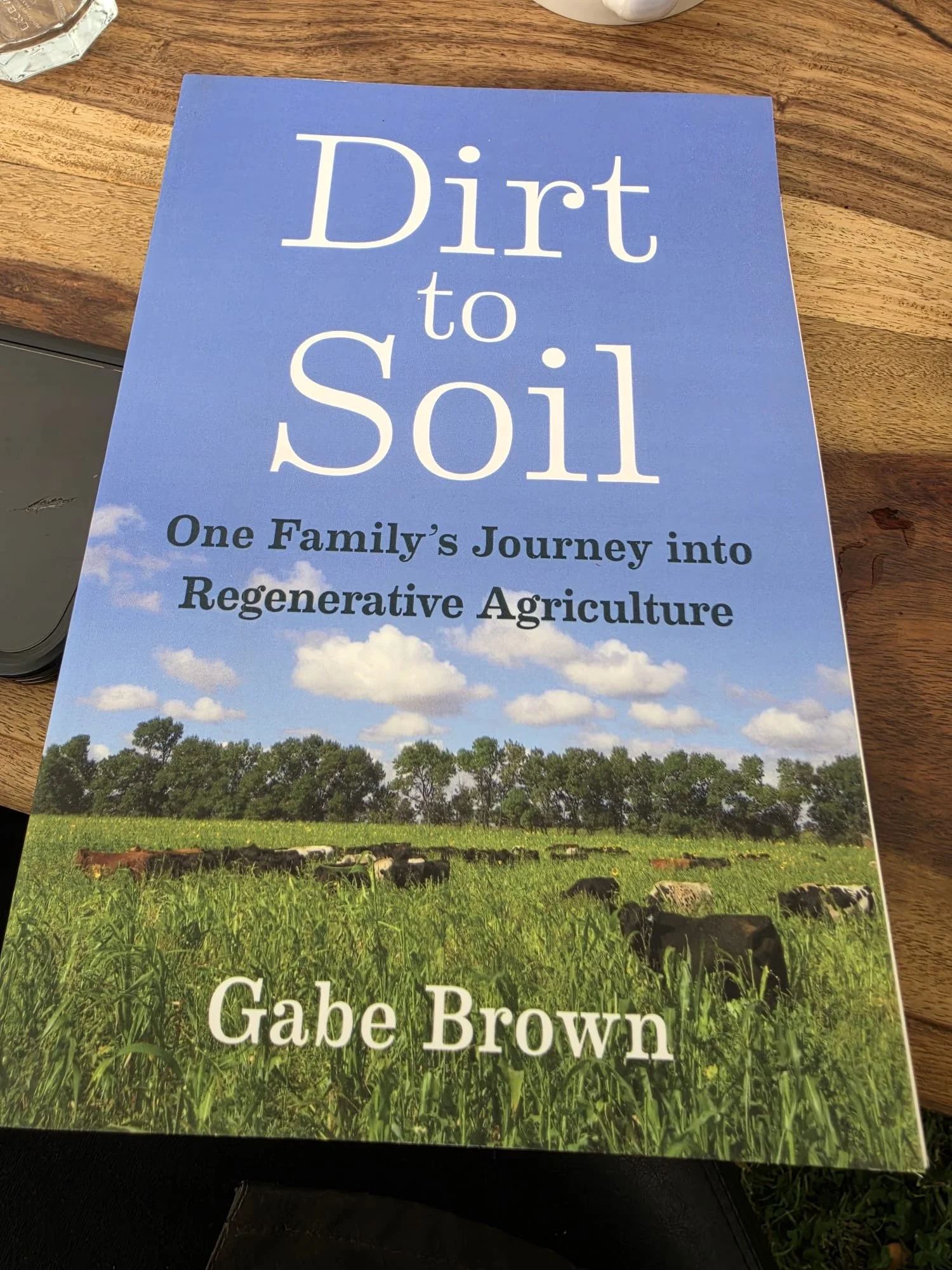
A key theme discussed during the visit was the practical methods that underpin regenerative agriculture. Regenerate Outcomes partners with regenerative farming pioneer Gabe Brown, and author of “Dirt to Soil”, through its farmer mentorship program. Brown co-founded the advisory business UnderstandingAg and developed the widely recognised “6-3-4" framework.
This set of regenerative principles provides a detailed roadmap for restoring ecosystem function and building resilient farming businesses and consists of the following:
The 6 Principles of Soil Health
The 3 Rules of Adaptive Stewardship
The 4 Ecosystem Processes
By focusing on the practical application of the “6-3-4" framework farmers can move beyond simply reducing environmental harm and instead seeks to rebuild the natural systems that underpin productive farming, healthy landscapes and resilient rural economies.
“The true key is restoring the four ecosystem processes that are just vital to any farm and its profitability.” - Gabe Brown
Supporting the transition
For farmers, shifting from conventional to regenerative practices is far from straightforward. It requires a fundamental change in how farms are managed, alongside new knowledge, skills, operational approaches. Soil carbon credits have been developed to benefit rural communities, nature, and climate.
During the transition period, farmers often face financial pressure through temporary yield reductions, upfront investment costs and greater uncertainty while soil health recovers.
“The way we define regenerative agriculture is farming in synchrony with nature to repair, rebuild, revitalise and restore ecosystem function, beginning with all life in the soil and moving to all life above the soil.”
Regenerate Outcomes plays a key role in helping farmers manage this uncertainty and risk. Through mentorship and technical support, the organisation assists farmers in implementing regenerative practices to improve soil health and measure gains in soil carbon - generating soil carbon credits. Farmers can then sell or retain these credits, creating an additional revenue stream to support farms through this challenging transition.
Soil carbon credits work like other carbon credits, but the carbon is stored underground: each one represents a tonne of CO2 equivalent removed from the atmosphere and locked into the soil through nature-positive farming practices.
Regenerate Outcomes’ Soil Carbon Program
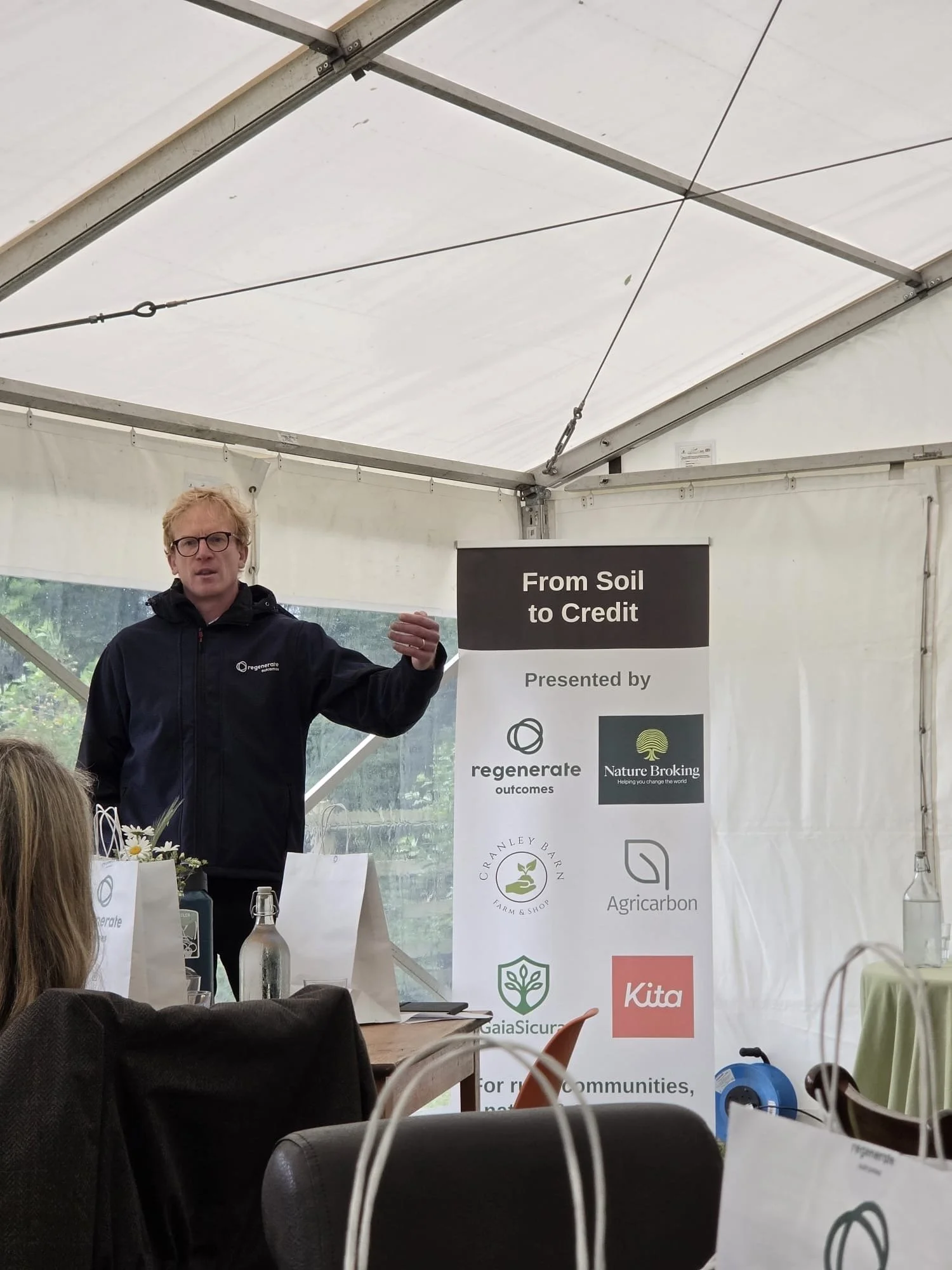
Tom Dillon, Managing Director, shared that Regenerate Outcomes has now achieved Verra registration for its UK soil carbon project under the VM0042 methodology for improved agricultural land management. This means their soil carbon credits generated through the program follow the Verified Carbon Standard (VCS), one of the most established standards in the voluntary carbon market.
The result is creating a new supply of high-integrity British soil carbon credits for organisations seeking to complement their decarbonisation strategies with trusted, nature-based removals.
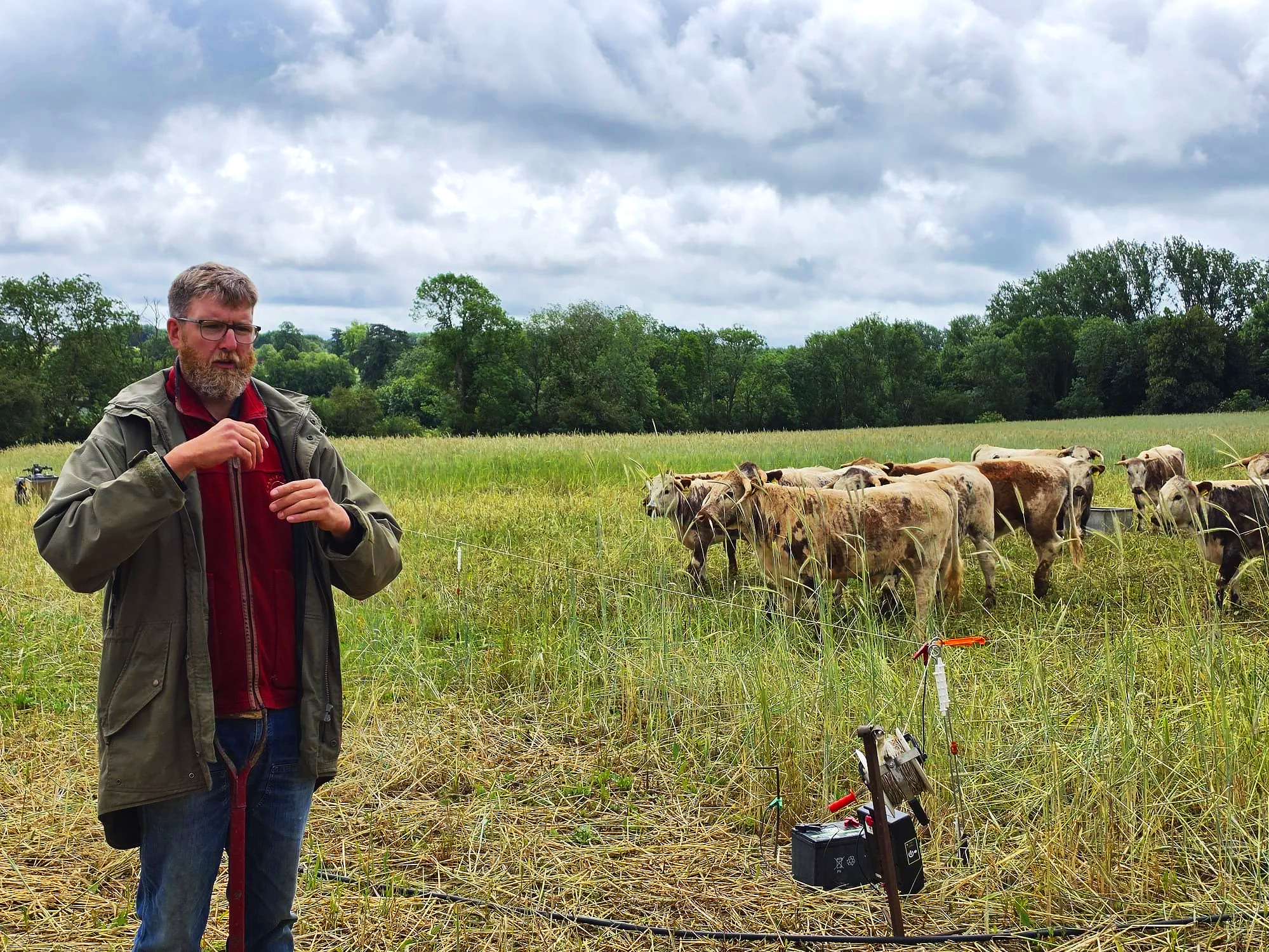
Soil carbon measuring
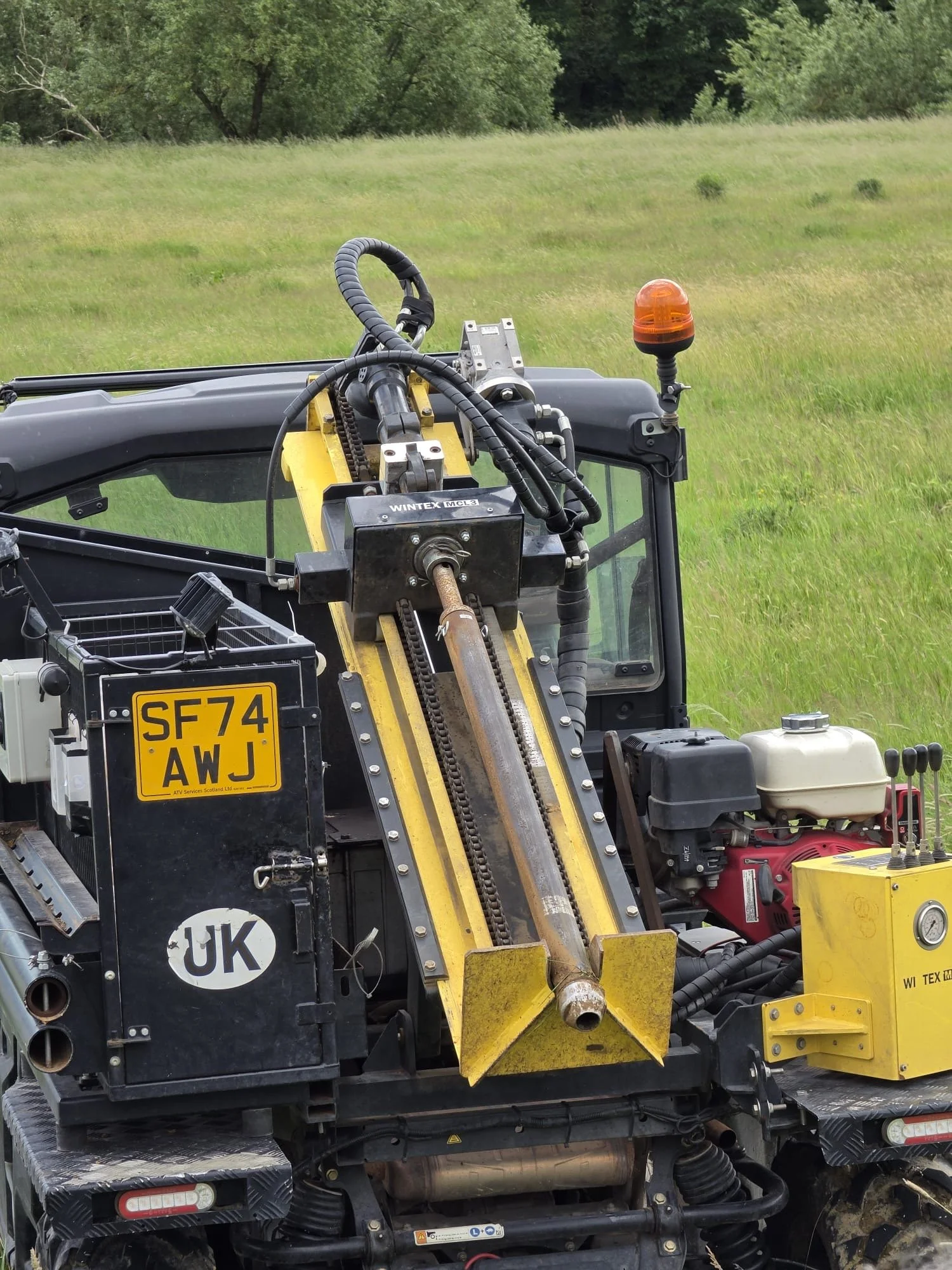
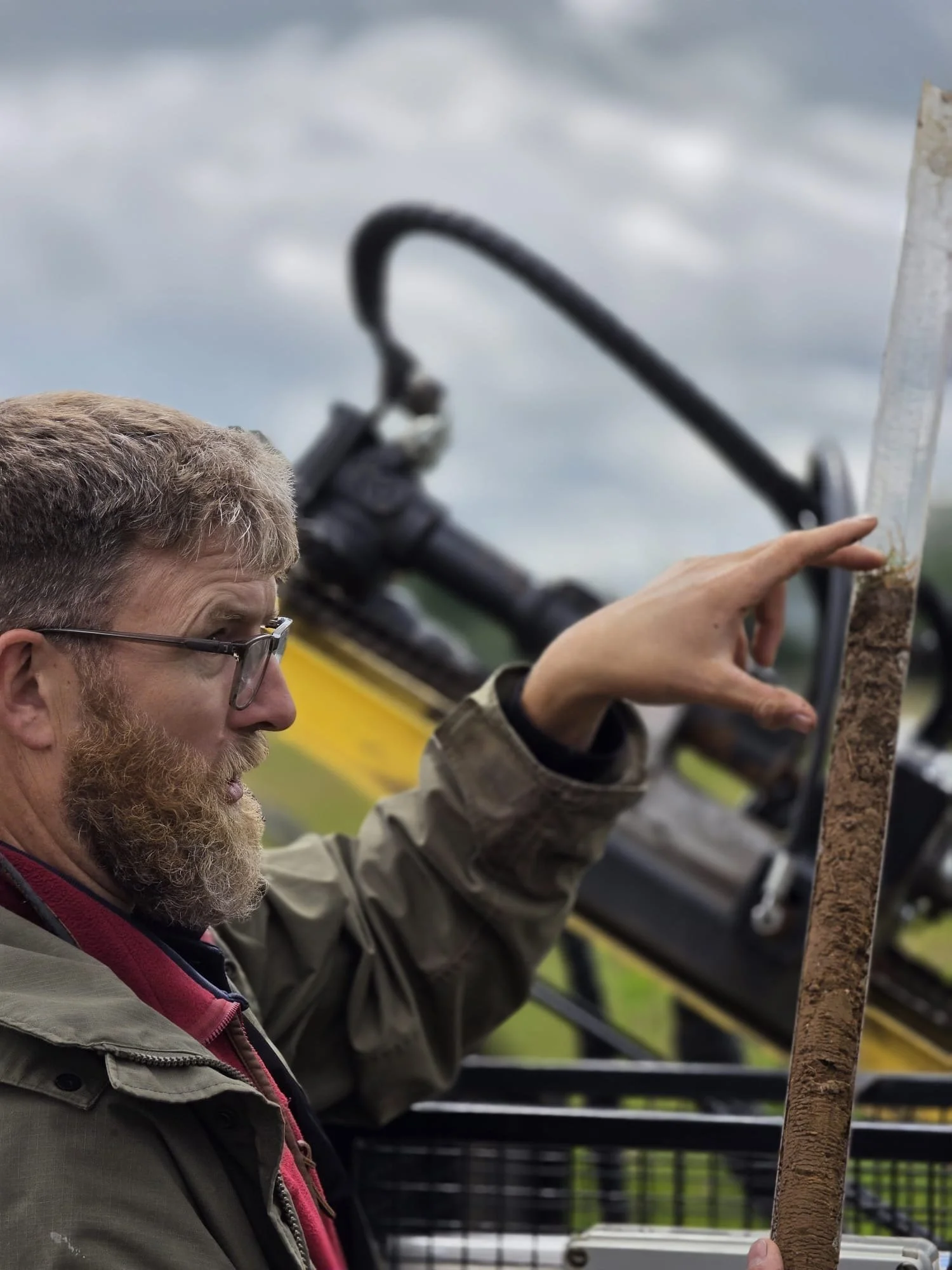
Annie Leeson, CEO and Co-Founder at Agricarbon demonstrated how rigorous soil sampling and robust measurement methodologies underpin the generation of high-quality soil carbon credits, with a practical demonstration of root penetration through the hard clay soil giving a real visual to the results being produced.
By quantifying improvements in soil carbon with scientific integrity and consistency, these data frameworks help to give confidence to soil carbon credit buyers helping to unlock value and investment for the regenerative agricultural movement.
Reliable monitoring and verification are critical to ensuring credibility within the voluntary carbon market and building long-term trust in soil carbon as a climate solution.

Carbon market development
Nature Broking gave an overview into the growing role of carbon and nature credits and offered a deeper understanding of carbon markets, particularly Regenerate Outcome’s position within it as a high quality supplier
Luke Baldwin, CEO and Co-Founder, took us through how the methodologies presented not only offset emissions but also target core Environmental and Social targets for commercial entities operating in a transitioning economy, whilst underpinning them with rigorous assurance practices and financial planning.
GaiaSicura built on this by explaining why tailored insurance is needed to cover the complex environmental, contractual and financial risks that come with generating soil carbon credits for farmers. In particular, CEO William Butler in conjunction with close partner Alek Pillay of Kita showed how the crucial missing piece of the carbon market is confidence, and that the kind of full project wrapper that they are providing can transfer the final elements of risk away from buyers and farmers in the program to ensure the smooth continuing operations of this vital work.
Empowering nature’s stewards
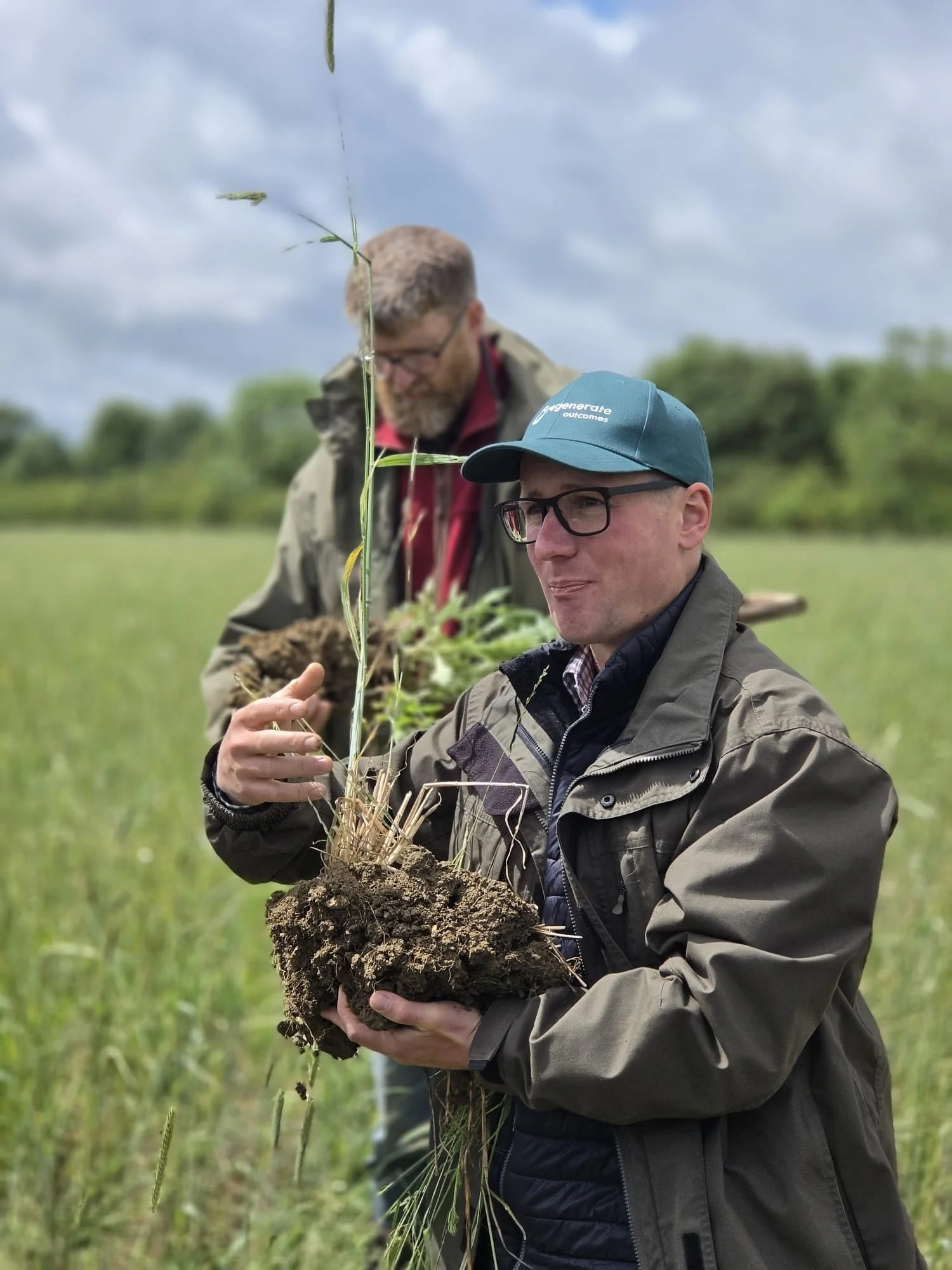
Tom Edmondson’s farm tour showed both the beauty of farming in harmony with nature and the practical challenges involved in making regenerative systems work.
It highlighted the value of mentoring, monitoring progress and generating carbon credits whilst equally derisking strategies using financial support mechanisms and nature insurance.
It also reinforced why GaiaSicura focuses on unlocking investment into nature regeneration at the project level, whilst ensuring risk transfer is as close to the ground as feasible: to support nature stewards like Tom in continuing the restoration work that underpins resilient food production and flourishing ecosystems.
By connecting farmers, carbon markets, insurers and investors, initiatives such as these are helping build the foundations for a more resilient and nature-positive agricultural future.
Start Structuring Risk For Your Nature Project
Speak with GaiaSicura’s specialists in nature insurance, natural capital risk transfer, and ecosystem restoration protection, to explore how your project can be de-risked, financed, and delivered with confidence.