
Natural Flood Management and Insurance: Making Resilience Investable
Natural Flood Management (NFM) can reduce flood risk, but scaling it requires new financial models. Insurance could help turn nature-based resilience into a measurable, investable service.
If nature can reduce risk, how do we value that benefit?
Natural Flood Management (NFM) has an important role to play in how we respond to increasing flood risk. By restoring natural processes across landscapes, NFM can help slow the movement of water, reduce pressure on downstream communities and infrastructure, and create wider environmental benefits at the same time.
The challenge is that delivering these projects at the scale required is not simply a question of identifying the right interventions. It is also a question of how we finance them.
Insurance is often suggested as an obvious source of funding. Insurers carry significant exposure to flood risk, so it seems logical that they should have a commercial interest in investing in measures that reduce that exposure. Yet, when we look more closely at how the insurance market operates, the relationship is not quite so straightforward.
Our latest report, The Insurance Market and Funding for NFM Projects, looks at some of the reasons why commercial investment from insurers has been difficult to unlock, as well as some of the ways the industry could contribute to a more sustainable funding model for NFM.
The important point is that these barriers are largely structural. They are not simply a reflection of insurers being unwilling to support resilience or invest in nature.
About the author
This report was written by our CEO and Founder, Will Butler, based on his experience working across insurance, nature-based solutions, and emerging approaches to risk transfer and resilience.
Will was also supported by conversations and insights from Laura Clavey at the London School of Economics, Corinne Martin at the Cambridge Institute for Sustainability Leadership and ClimateWise, and Phoebe Cox at the Green Finance Institute. Their work, alongside the wider research and collaboration referenced throughout the report, has helped inform the thinking behind the opportunities discussed here.
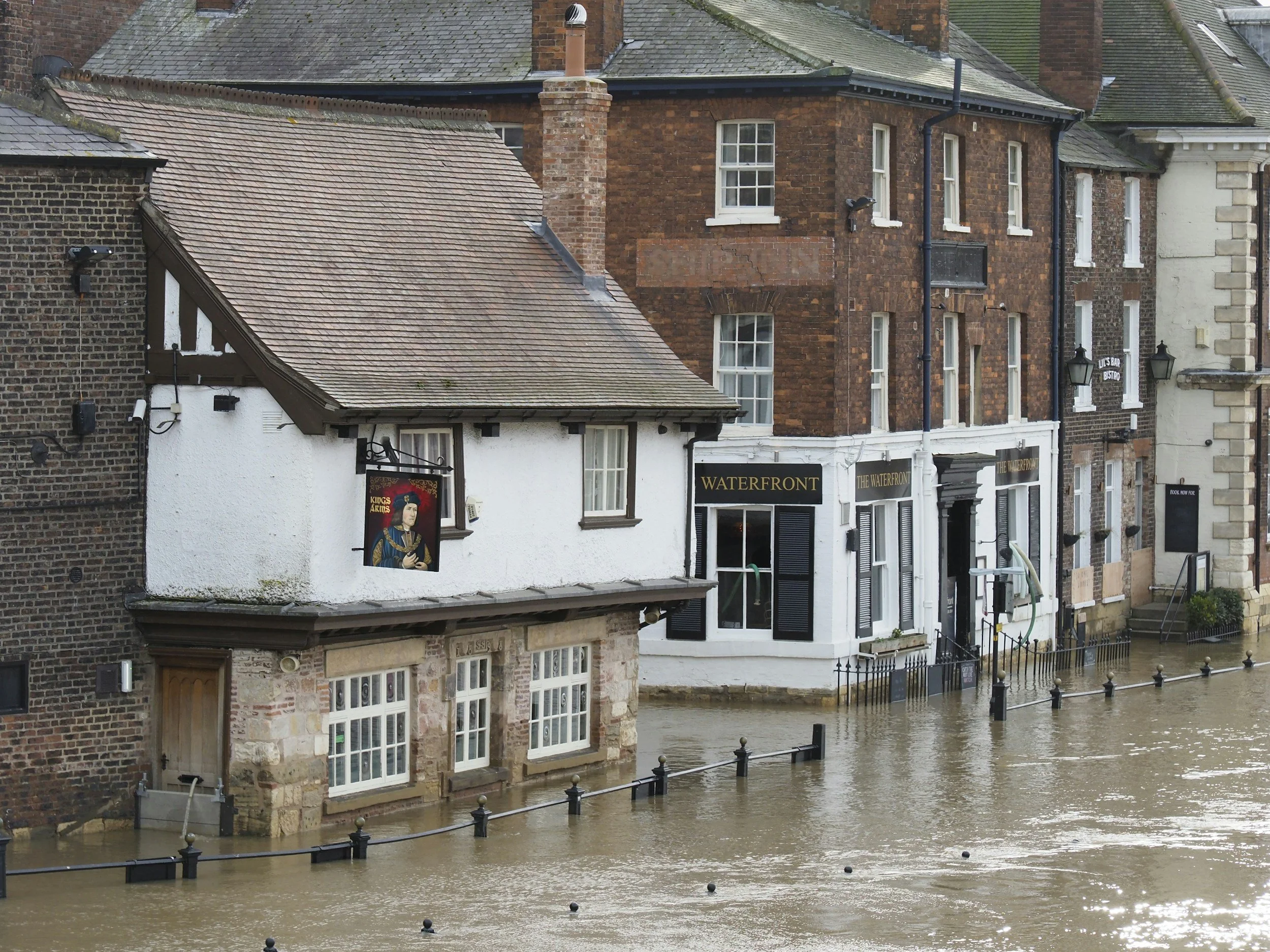
Why is NFM difficult to fund through insurance?
One of the clearest challenges is the fact that the benefits of NFM are shared across a catchment, while the cost of investment is often borne by an individual organisation.
Take a simple example. Three insurers might all have customers and properties exposed to flooding within the same catchment. If one insurer funds an NFM intervention that reduces the overall flood risk, the other two insurers benefit from that reduction too, without necessarily contributing to the cost.
This creates a difficult commercial proposition. The insurer making the investment cannot easily capture the full value of the benefit it has created.
This is the classic “free rider” problem, but it is particularly relevant to NFM because flood risk reduction is inherently collective. A restored floodplain or wetland does not reduce risk only for the properties insured by one company. Its benefits extend across the wider catchment.
There is also a significant difference between the timescales involved.
NFM projects can take years to develop and implement, and the full benefits of interventions may take much longer to become apparent. Insurance, meanwhile, operates through relatively short underwriting cycles. Most policies are annual, and insurers are continually reviewing their exposure, pricing, capital requirements, and profitability.
That makes it difficult to justify a substantial investment today where the financial return may only become apparent over a much longer period.
Local flood reduction, global insurance markets
Another issue is the relationship between local risk reduction and the wider insurance and reinsurance market.
An NFM project may have a very specific impact within a particular catchment. It might reduce the likelihood or severity of flooding for a group of properties, businesses, or infrastructure assets in that location.
Reinsurance pricing works differently. It is influenced by global catastrophe trends, climate modelling, historical loss data, and the aggregate exposure held across portfolios.
This means that even if an NFM project successfully reduces flood risk locally, there is no automatic mechanism for that reduction to feed through into the cost of reinsurance.
That matters because reinsurance can represent a significant proportion of the premium paid by the direct insurer. If the risk reduction delivered by an NFM project is not reflected in the models and data used further up the insurance chain, the commercial benefit to the insurer can remain difficult to demonstrate.
There is therefore a gap between the physical risk reduction that NFM can deliver and the way that reduction is currently recognised within insurance markets.
Closing that gap is going to require better data, better modelling, and closer collaboration between the insurance and NFM sectors.




We need to get better at measuring what nature delivers
This brings us to one of the more fundamental questions around NFM: how do we put a value on the risk reduction that nature provides?
NFM is not a single intervention. Projects can involve wetland restoration, woodland creation, floodplain reconnection, changes to agricultural land management, leaky barriers, and a combination of different measures across a catchment.
The outcomes are also influenced by a wide range of factors, including rainfall, catchment conditions, existing infrastructure, land management, community engagement, and long-term maintenance.
That complexity makes standardisation difficult, but it does not mean measurement is impossible.
What is important is that we start to focus more clearly on the outcome being delivered. For the insurance and investment markets, the question is ultimately less about whether a particular intervention has been implemented and more about what measurable reduction in flood risk it produces.
If that reduction can be demonstrated consistently, it becomes much easier to connect the work being undertaken on the ground with the financial systems that already exist around risk.
This is where we see a particularly interesting opportunity.
NFM could move from being viewed primarily as an environmental intervention to being understood as a service that provides measurable resilience and risk reduction.
So, could insurers fund NFM?
There are good reasons to be cautious about expecting insurers to become a major source of direct investment in NFM under the current market structure.
That does not mean there is no role for them.
In fact, we think there are several ways in which the insurance industry could become much more involved.
One option is to develop shared funding models that bring together the organisations benefiting from resilience within a particular catchment. These could include insurers, businesses, infrastructure operators, property owners, and other organisations with a direct financial interest in reducing flood exposure.
Pooling demand and funding in this way could help address the free-rider problem while creating a more reliable revenue stream for NFM projects.
It also provides a way of aligning contributions with exposure. Rather than asking one organisation to carry the cost of a project that benefits everyone, the cost can be shared between those who stand to benefit from the resulting reduction in risk.
Insurance data could help put a value on resilience
There is another opportunity that we believe deserves much more attention: the data already held by insurers.
Insurance companies have extensive information about exposure, claims, losses, and the types of assets affected by different risks. Used appropriately, and with the right data-sharing arrangements in place, this information could help NFM projects demonstrate the economic value of reducing flood risk within a particular area.
For example, a project could look at historic flood losses affecting commercial properties within a catchment, identify the assets currently exposed, and then consider how the proposed intervention could change that exposure.
This provides a potential bridge between hydrological modelling and the financial language used by businesses and investors.
The aim would not be to replace the scientific assessment of an NFM project. Rather, it would add another layer of information that helps translate the physical benefits of the intervention into financial terms.
That could be particularly valuable when projects are trying to demonstrate their proposition to potential funders or commercial beneficiaries.
We also need to think differently about time
The mismatch between NFM's long-term nature and the annual insurance cycle is unlikely to disappear overnight.
There may, however, be ways to work within that reality.
One idea explored in our report is to consider payment structures linked to measurable annual reductions in risk. If a project can demonstrate that it has delivered a defined service to an insurer's portfolio during a particular period, there may be a basis for linking contributions to that annual benefit.
This is not an established market mechanism, and it would require further development and testing.
It does, however, offer an interesting way of thinking about the problem. Rather than trying to make a long-term nature investment fit directly into a conventional investment model, we can start asking whether the benefits delivered by NFM can be recognised as services over time.
That could help bring the timescales of nature restoration and financial decision-making closer together.

Insurance has a role beyond providing capital
Perhaps the most immediate opportunity for insurance is not as a direct investor in NFM, but as an enabler of investment.
NFM projects, like any other large-scale project, carry risks. There are operational risks, professional risks, environmental risks, and risks associated with the delivery of the project itself.
Appropriate insurance can transfer some of those risks away from developers and investors.
The underwriting process also brings a different perspective to a project. Risks have to be identified, assessed, and understood before an insurer is willing to provide cover. A comprehensive insurance programme can therefore provide investors with an additional indication that the project's risks have been properly considered.
For projects seeking institutional capital, that can be useful.
It does not remove every risk, and it certainly does not guarantee project performance. But it can help make a project easier for investors and other stakeholders to understand from a risk-management perspective.
There is still an important limitation, however.
Unlike some areas of natural capital, such as carbon or biodiversity units, NFM does not yet have a universally accepted performance metric that can define the precise service being purchased.
That means insurance can cover many of the risks that could interrupt an NFM project, but it cannot yet fully transfer the risk of a project failing to deliver a precisely defined flood-reduction outcome.
Developing better ways to define and measure that outcome will therefore be an important part of building a more mature NFM finance market.
What would a more investable NFM market look like?
Ultimately, we think the conversation needs to move beyond whether insurers should or should not fund NFM.
The more useful question is how we create a market in which the value of resilience can be properly recognised.
That means being able to understand what risk a project is reducing, how much that reduction is worth, and who benefits from it.
If we can answer those questions with sufficient consistency, a number of things become possible.
Demand can be aggregated across businesses and insurers that share exposure to the same catchment. Insurance data can help demonstrate the financial consequences of flood risk. Payment mechanisms can potentially be linked to measurable resilience outcomes. And insurance can provide the risk-transfer mechanisms that help make projects more attractive to investors.
None of this is a silver bullet, and there is still significant work to do.
But the opportunity is worth pursuing because the funding challenge facing NFM is not going to be solved through grants and philanthropy alone. If we are serious about delivering nature-based flood resilience at landscape scale, we need to develop commercial models that allow the value of that resilience to be recognised.
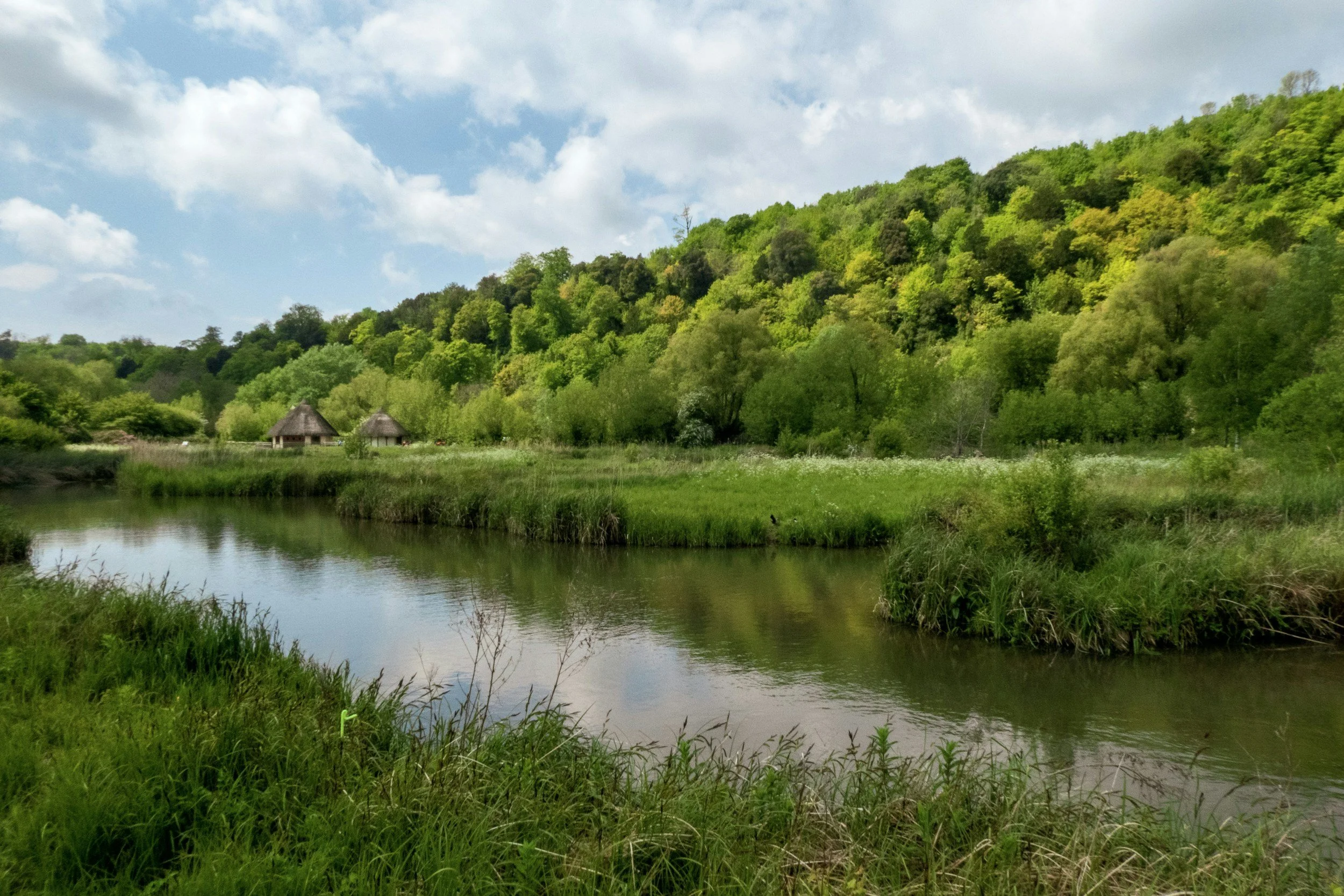
Building the financial architecture for resilience
There is a growing understanding that restoring natural systems can help us manage some of the physical risks associated with climate change. The next challenge is making sure our financial systems are capable of recognising and supporting that role.
For GaiaSicura, this is where the insurance conversation becomes particularly important.
Insurance already has a sophisticated understanding of risk, exposure, financial loss, and uncertainty. It also has data and modelling capabilities that could help us better understand the economic value of the risk reduction delivered by nature.
The opportunity is to bring those capabilities together with the knowledge and experience already developing within the NFM sector.
If we can develop credible ways of measuring the risk reduction delivered by NFM, and connect those measurements to the organisations that benefit from it, we can start to build a much stronger financial case for investment.
That would mean moving towards a model where NFM is not dependent solely on organisations choosing to invest for the wider good, but where the resilience it creates has a recognisable economic value.
That is the shift we need to explore if we want Natural Flood Management to move from a collection of individual projects to a genuinely scalable approach to flood resilience.
The challenge is not simply delivering more NFM. It is building the financial architecture that allows the value of the resilience it creates to be recognised and funded.
That is where we believe insurance has an important role to play.
The Insurance Market and Funding for NFM Projects, by William Butler, CEO and Founder of GaiaSicura.
Speak with an expert
If your organisation is involved in the development or delivery of a natural capital or nature restoration project, our team of experts can help you understand how Environmental Professional Indemnity insurance fits within your wider risk management strategy.
