
Scaling Nature Regeneration: Reflections from Climate Week Zürich 2026
How local communities, insurance and integrity are shaping the future of investable nature restoration and why building confidence around risk, resilience and long-term incentivised project delivery is becoming essential to scaling natural capital markets.
Last week, Sagal Ali and Hannah Floor attended Climate Week Zürich. On the surface, it appeared to be a blur of workshops, panels, and apéros. Beneath that, however, it felt like a deeper test of whether nature regeneration can become investable at scale as expert speakers explored what happens when you place people, risk and integrity at the centre of that conversation.
Across the different rooms, one pattern kept resurfacing: nature is already performing the work of climate risk management. The real challenge is now designing financial and insurance systems capable of recognising, supporting, and scaling the work needed.
Restoration as Economic Infrastructure
The opening flagship session, “Climate & Nature: Achieving Restoration at Scale,” hosted by The Rocket Foundation and Rebecca Berlinger, focused not only on restoration projects, but on livelihoods and people who benefit. The speakers brought the discussion back to a simple reality: in much of the Global South, nature is the main source of income and a foundation of local economic infrastructure.
Sheeba Sen(Xylo Earth and Hasten Regeneration) described the “integrity gap” as the distance between the values needed for trustworthy, community‑centred restoration and the values embedded in today’s investment structures. Investors are not short of appetite, but of confidence. Concerns around durability, fair governance structures and scalability continue to shape their perception of risk.
Minni Jain (The Flow Partnership) challenged how we define risk itself: is the greater risk losing part of an investment, or continuing to underinvest in depleted ecosystems, threatening long-term economic and social stability on our planet? Framed in that way, restoration looks less like philanthropy and more like rational risk management.
Communities as Underfunded Risk Managers
One of the clearest threads was the role of communities as providers of planetary services. They are not just beneficiaries of projects; they are the stewards who maintain forests, restore soils, and protect coastlines and watersheds that underpin ecosystem resilience.
Yet these people are often the least protected and the most exposed to climate risk.
When custodians of nature are treated as marginal recipients of benefits, projects inherit fragility. When they are properly resourced, they become a flywheel: environmental recovery improves livelihoods, which in turn strengthens long-term incentives to maintain and deepen restoration over time.
However, the capital structures around many projects still mirror older patterns of control and extraction. Many discussions returned to the same unresolved question: how do we build financial and governance models where communities are recognised and funded as core delivery partners?

When Economies Edge Towards Uninsurability
The WWF and Women in Sustainable Finance session on “The Uninsurable Economy” (based on the WWF white paper) shifted from individual projects to entire markets edging beyond the limits of traditional insurance.
Protection gapsare widening because of unavailability (insurers withdrawing from high‑risk areas), unaffordability (premiums spiking) and unawareness (communities not knowing what is possible to insure). At the same time, nature itself - our first line of defence - is almost entirely uninsured. When disasters hit, the cost of restoring ecosystems frequently falls back onto government and public budgets.
Butch Bacani from the UNEP framed this as a cultural as much as a technical issue. Adaptation remains the poor cousin of mitigation, and after the last climate disaster and before the next, recovery and preparation are increasingly inseparable. Insurers can build a culture of prevention by translating climate risk into the language of risk reduction and incentives that reduce losses at source.

Making Nature a Credible Asset Class
At SCOR and NatureRe Zürich’s event on “Investing in Nature Regeneration,” the conversation moved into the realm of investability. Nature projects were framed as a maturing asset class, but one still struggling with delivery risk, long time horizons and perceived scarcity of “high‑quality” projects.
Several key themes continued to emerge:
Developing credible and standardised accreditation systems
Supporting projects early, before environmental credits are generated
Moving beyond a purely defensive insurance mindset focused only on what can no longer be insured
There was wide agreement that insurance needs to be embedded at the start of projects, not added later as a bandage once risks are already imminent. That shift is essential if nature‑based solutions are to move from fragile pipelines to portfolios that private capital can engage with at scale.


Carbon Markets 2.0 and the Blue Frontier
Thursday’s “Lunch & Learn” on high‑quality carbon markets gave a snapshot of Carbon Credits 2.0: more scrutiny, more technology, more insistence on integrity.
Brooke Davies from CarbonPool talked about how the carbon market should behave like a mature market, professionalised through verification standards, insurance and technology. Because nature‑based projects take years to mature, investors need confidence now in environmental outcomes and the credits they are buying.
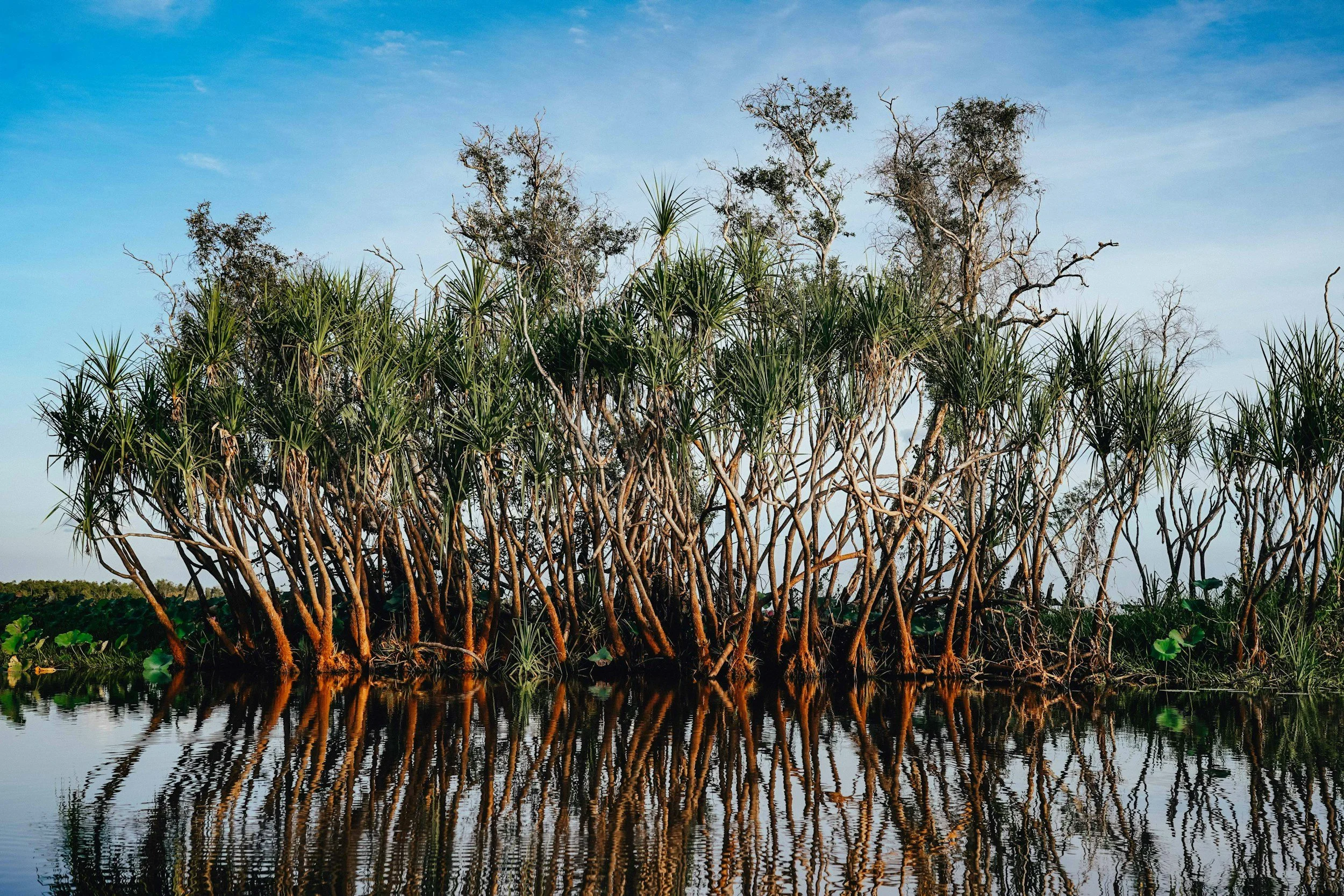
The BlueYou session on “Investable Mangroves & Restorative Blue Foods” pushed this logic into the blue space. Mangroves emerged as a triple‑bottom‑line solution: carbon storage, coastal protection, and livelihoods via regenerative aquaculture. Today, blue carbon still represents a tiny fraction of voluntary market issuance. Scaling will require the same ingredients discussed: blended finance, aggregation of small projects, long‑term offtake agreements, and early‑stage technical support.
Here too, nature insurance is only just starting to be named explicitly. Concerns around non‑delivery, catastrophic loss and counterparty risk are all questions of risk transfer. When speakers from Swiss Re and Julius Bär emphasised how insurance credit markets can transform investor confidence, it opened the door to a bigger discussion about the role of insurance.
What This Means for Our Work at GaiaSicura
This week reinforced our belief that insurance is a critical enabler in nature regeneration. Its role is to build confidence around outcomes, convert uncertain liabilities into defined risks, and help turn fragile projects into investable structures.
Nature is already doing the work of managing climate risk. The task now is to ensure that our financial and insurance tools recognise, support and scale that work, in partnership with the communities who are already at the front line of nature restoration and helping to Secure a Future for Nature.
Written by Hannah Floor, Founder’s Assistant and Sagal Ali, Introductory Broker and Client Executive.
Start Structuring Risk For Your Nature Project
Speak with GaiaSicura’s specialists in nature insurance, natural capital risk transfer, and ecosystem restoration protection, to explore how your project can be de-risked, financed, and delivered with confidence.