
Beyond the Echo Chamber: Why Insurance Must Broaden the Nature Conversation
On 16 April, leaders from across insurance, policy, and sustainability gathered at Insurance in a Changing World 2026 (ICW26), hosted at The Conduit.
The discussions during the event tackled how the insurance sector is responding to a world defined by accelerating change, from nature loss and climate risk through to AI (Artificial Intelligence), trust, and the growing protection gap.
Driving Meaningful Change
One theme surfaced repeatedly:
The industry is not short of ideas or insight, but these conversations need to broaden to a larger more diverse audience to build confidence and incite systemic change.
For a sector that touches almost every part of modern life, insurance has a unique platform. But if its most important debates remain confined to specialist circles, its ability to drive meaningful change is limited.
This tension, between deep expertise and wider engagement, sat at the heart of the day.
Nature Enters the Insurance Conversation

One thought provoking panel explored the intersection of nature and insurance, featuring the Secretary General of the Convention on Wetlands Dr Musonda Mumba, Inclusive Insurance Lead from UNDP, Saurabh Sharma and our CEO Will Butler.
The message was simple, but powerful: Nature is not just an environmental concern, it is a risk issue.
Wetlands, forests, and coastal ecosystems are not abstract ecological assets. They are increasingly recognised as critical infrastructure for managing risk.
As Dr Musonda Mumba highlighted, ecosystems such as wetlands sit at the intersection of land and water, delivering essential services such as:
flood mitigation
water regulation
carbon storage
biodiversity support
These nature-based solutions (NbS) are directly tied to economic resilience. In fact, intact wetlands alone are estimated to contribute around 2% of global GDP.
Yet they are also among the most degraded ecosystems on Earth. From disappearing inland seas to urban wetland loss, the degradation of these systems is accelerating risk across cities, economies, and supply chains.
The implication is clear: Without functioning natural systems, many parts of the world will become increasingly difficult to insure.
A Personal Reflection: Discovering the Value of Wetlands
Since the conference I’ve found myself engrossed in this topic.
What struck me most was the scale of loss.
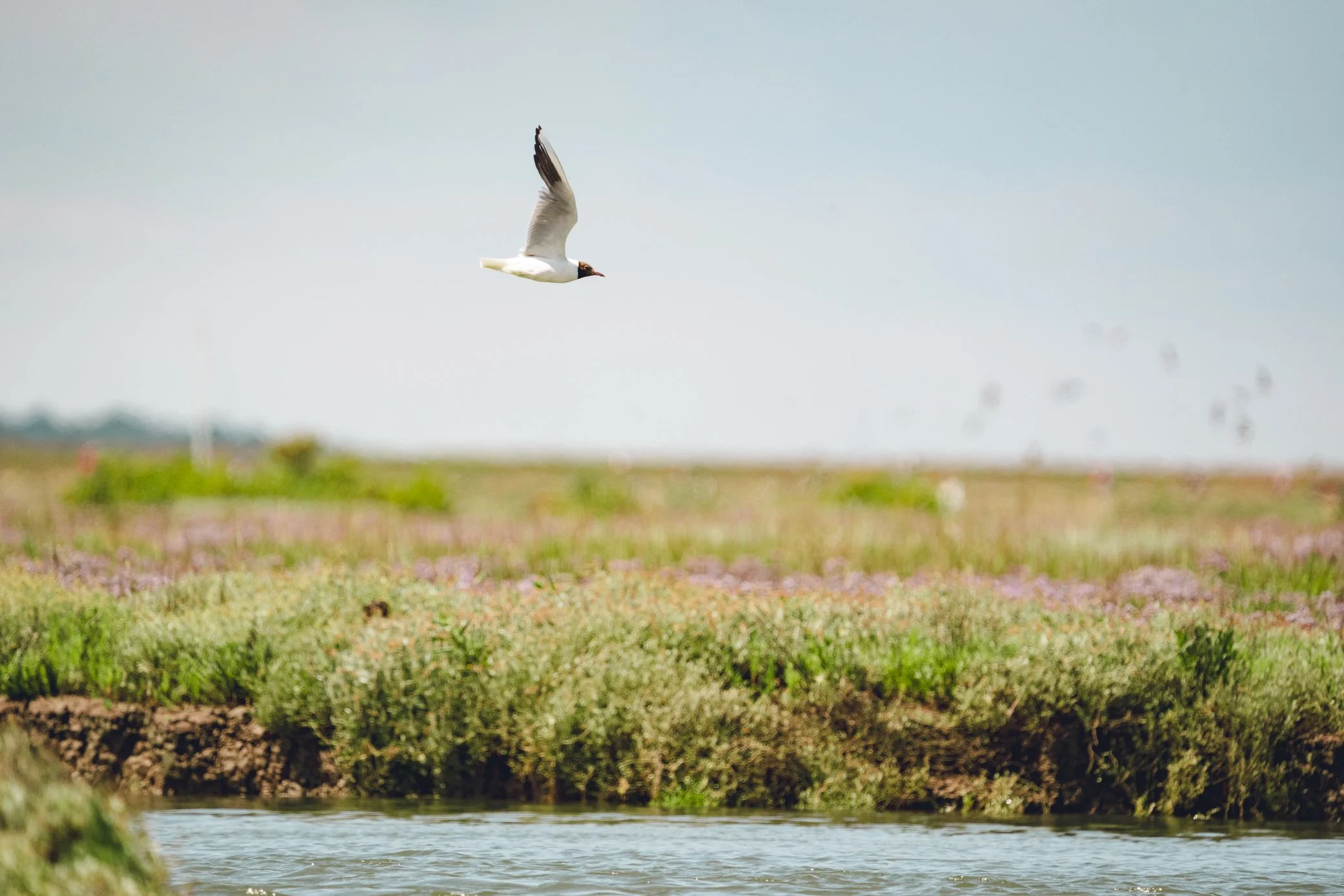
Wetlands are disappearing faster than any other ecosystem on Earth.
They are some of our most powerful carbon stores and natural flood defences, yet most people have very little sense of what we’re losing, and more alarmingly, why that loss is so catastrophic.
And therein lies the problem.
It’s centred deep in the lack of communication, awareness and engagement.
“These spaces are disappearing – vanishing – gone in our lifetime.” Dr Musonda Mumba, ICW26
From Environmental Good to Economic Asset
A broader shift discussed is the repositioning of nature as an economic asset.
This is not about commodifying nature in a reductive sense, but about recognising its real, measurable contribution to economic stability.
As Sharma noted, entire sectors, from agriculture to infrastructure, depend on functioning ecosystems. The challenge is that while many actors benefit from nature, few are currently paying for its protection.
This creates a gap that must be addressed if nature-based solutions are to scale.
The Role of Policy and Governance
Policy also plays a critical role in enabling scale.
Rather than treating nature loss as a standalone issue, both Sharma and Mumba emphasised the need to embed it across all policy areas, including:
food security
disaster risk financing
infrastructure planning
Mumba pointed to examples such as China’s integrated wetland legislation, which cuts across sectors and governance levels, as a model for systemic thinking.
At the same time, she stressed the importance of:
scientific evidence
indigenous knowledge
public awareness
These elements are essential not only for informing policy, but for building the societal support needed to sustain long-term change.
Sharma highlighted the world’s first Jaguar-Protection insurance, launched in Argentina by the Government of Misiones with the support of the UNDP.
Critically, this innovative insurance solution marked a shift away from compensation schemes to deal with conflict resolution towards a new era in biodiversity finance.
Insurance: Not a Silver Bullet, But a Critical Enabler
Another key takeaway from the panel was a reframing of insurance’s role.
As Will Butler CEO highlighted, insurers are often positioned as a “silver bullet” solution, expected to fund or solve nature-related challenges at scale.
The reality is more nuanced.
Insurance is not designed to be a primary source of long-term capital for nature restoration. Legacy framework constraints, short-term policy cycles, competitive dynamics, and reinsurance structures, limit its ability to play that role.
But where insurance does have immense value and opportunity is by building confidence.
By underwriting risk and providing confidence on outcomes, whilst transferring away unavoidable risk nature insurance can:
unlock investment
support revenue models
make nature-based projects viable at scale
In this sense, insurance is less a funder, and more a market enabler in the short term.

The Path Forward
From the discussions on the day, it was clear that the insurance sector is at a turning point.
There is growing recognition that:
traditional risk models are being stretched by climate volatility
protection gaps are widening
trust and relevance are under pressure
The question is no longer whether the sector needs to adapt, but how.
Nature-based solutions offer one pathway forward:
reducing risk at source
improving resilience
creating new forms of value
But realising this opportunity requires more than technical innovation. It requires cultural and communicative change.
Breaking Out of the Echo Chamber
This brings us back to the central insight of the conference.
If we want nature-based solutions to gain real traction, the work has to start well beyond the rooms where it’s already understood.
That means:
translating technical concepts into accessible language
connecting global challenges to local realities
engaging audiences who are not already “in the room”
Because ultimately, the success of nature-based solutions depends on collective understanding, not just expert consensus.
From Awareness to Action
The call to widen the conversation is not just a communications challenge, it is a strategic imperative.
Without broader awareness:
demand for nature-based solutions will remain limited
investment will struggle to scale
policy momentum will stall
But with it, there is the potential to:
align incentives across sectors
unlock new markets
build resilience at scale
Conclusion
The discussions at ICW26 made one thing clear:
The tools, knowledge, and frameworks to address nature-related risk are increasingly available.
What is missing is not insight, but reach and confidence.
As I reflect on the event, and on my own growing understanding of nature-based solutions, one thing stands out:
Protecting nature starts with understanding it.
And if the insurance industry wants to play a meaningful role in that future, it must ensure the conversation extends far beyond its own walls.
Ready to explore how bespoke nature insurance can support more equitable nature-based solutions?
Watch the Panel discussion at ICW26 here.